Question: What separates a true leader from a follower?
Take a minute to think about it…
Because I bet innovation won’t be your answer unless you know the quote.
“Innovation distinguishes between a leader and a follower.”
That’s a well-known statement of Steve Jobs, the co-founder of Apple. What a strange differentiator! But when you think about it, it makes perfect sense. Titles and authority don’t create a leader. A true leader is defined by their ability to create what doesn’t yet exist. Followers wait for direction; leaders design the direction. And it shows in their mindset and everyday actions.
Importance of leadership in fostering innovation
The weight of promoting innovation lies on the shoulders of the leaders. They’re the catalyst that transforms potential into progress.
If an employee brings up an innovative idea or a creative solution to the problem, it won’t go far if the higher delegation lets it pass. If the cycle repeats, the employees would stop presenting ideas, withering away creativity and innovation.
On the contrary, if decision-makers consider and refine the idea, it could become a potential market breakthrough, substantially benefiting the company and keeping it ahead of its competition.
That’s the power leadership holds. When a leader is ready to accept new ideas, experiment with their approach and isn’t rigid in their systems, processes and products, it shows in their actions that empower the employees to be creative.

Leadership styles for innovation
In 2023, economic researchers in Portugal published a study analysing the relation between leadership and innovation. They surveyed 13,702 organisations and found that leadership directly influences the company’s ability to innovate. They compared four leadership styles: Transformational, transactional, democratic and autocratic. Can you guess which styles favoured innovation?
If you guessed transformational or democratic, you’re right. And if you don’t know about these styles, you can check out my article on the 6 most common leadership styles, where I explain these models in detail and help you identify your signature leadership style.
The study found that innovation was stifled when the leaders were autocratic or transactional (direct and rigid). While collaboration and motivation, which come with transformational and democratic leadership, sparked creativity, leading to innovation. This shows that innovation demands collaboration, trust, psychological safety and creative encouragement.
Let’s look at how each model participates in innovation.
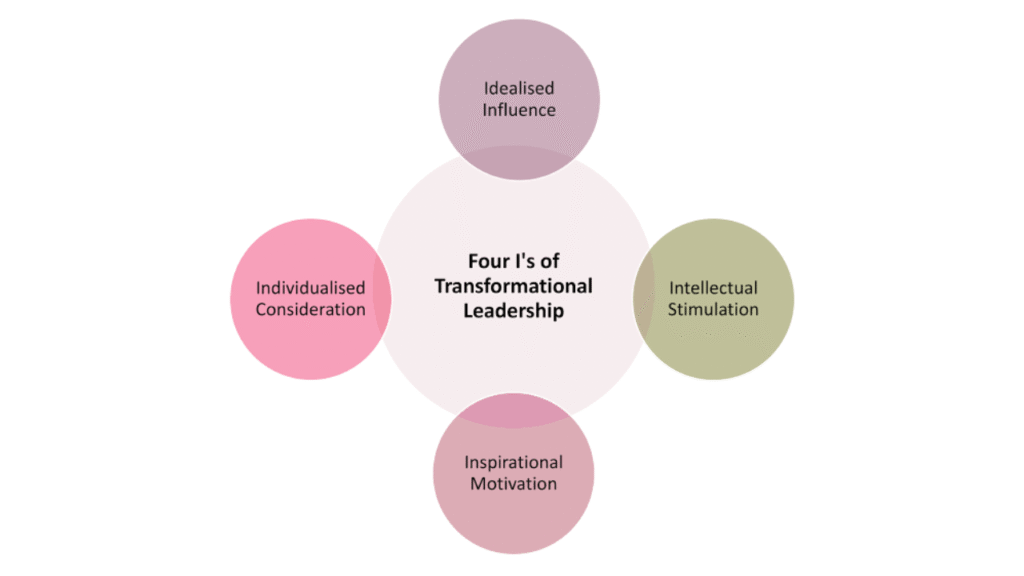
Transformational leadership
Transformational leadership sets the foundation, motivates the team and aligns them to a common goal. It serves as the driving force, keeping the team morale high and providing the necessary sense of purpose and mission to keep the team pumped up.
Democratic leadership
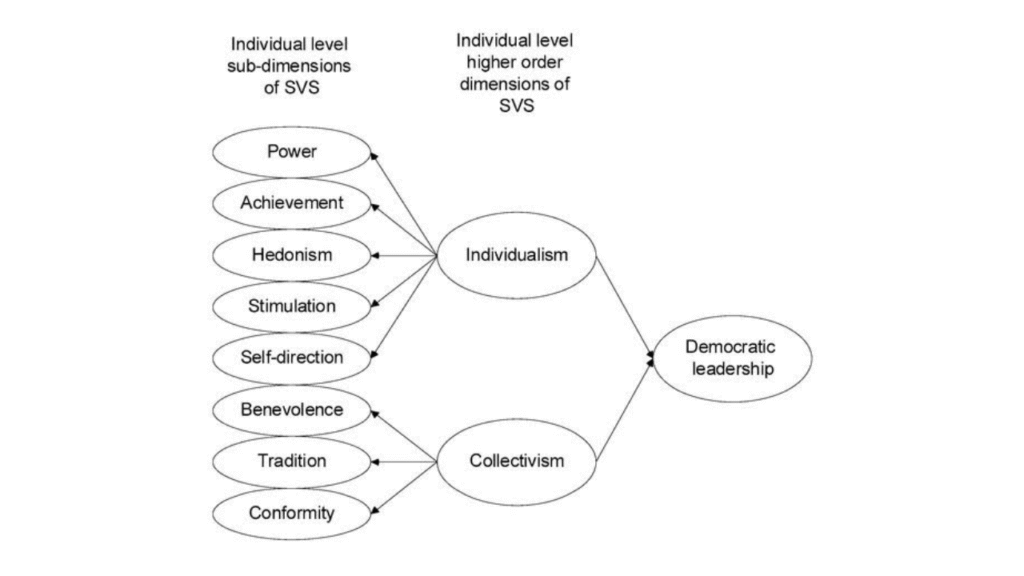
If transformational leadership is the fuel for innovation, democratic leadership keeps it in motion. It involves every member in the decision-making process. Everyone is heard, their opinions and ideas are considered, making everyone feel part of a team working towards a shared goal. It brings out the collective wisdom and creativity of every individual.
Laissez-faire leadership
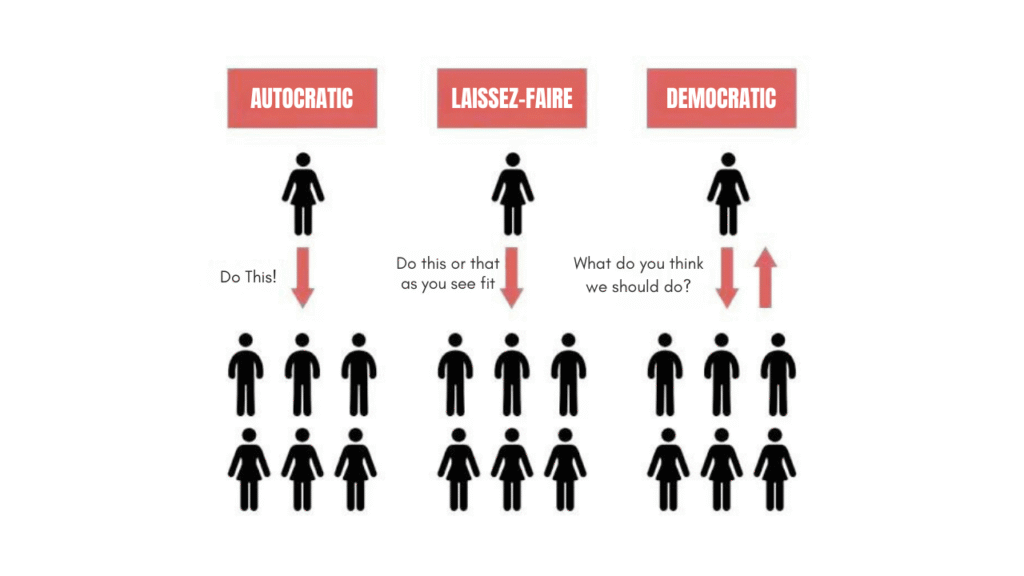
If your team consists of highly skilled individuals, laissez-faire is the most suitable leadership style for innovation. It allows individuals to take the lead within their area of expertise, which flourishes creativity. However, it’s only applicable to a high-skilled team, as it gives full autonomy to the individuals.
Team building for innovation
Innovation leadership demands employees’ creative potential. And though the leadership dictates innovation, the team has the biggest participatory role. The second most important aspect for innovation, after leadership, is the team. A leader can inspire innovation, but without the right mix of people, skills, and mindsets, even the best ideas stall.
The right team questions assumptions, challenges existing models, and isn’t afraid to test unconventional solutions. To cultivate that, leaders must hire for curiosity as much as competence, encourage collaboration across roles, and reward initiative rather than compliance.
From a data leader to an innovation data leader
Innovation doesn’t happen because someone commands it. It happens because a leader creates the conditions for it with the right leadership style and behaviour.
Data leaders are already deeply engaged in analysing data, comparing ideas and approaches, and determining the right course of action through logic and evidence.. What you, as a data leader, need for innovation is the ability to create an innovative environment for the team. Once the ideas start rolling in, you already got the skillset to assess them.
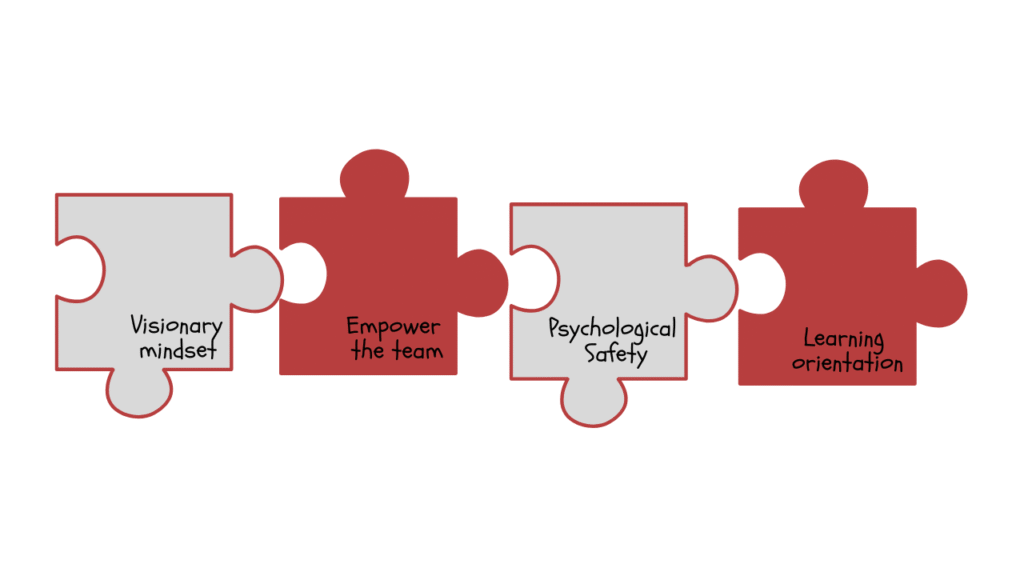
Visionary mindset
Data teams are often buried in dashboards, pipelines, and models. Without a clear vision, it’s easy for them to lose sight of why their work matters. An innovative leader translates technical goals into a story that excites and aligns the team. They connect daily analytics tasks to larger business outcomes.
Instead of saying “optimise this model”, address it through the real problem or impact, like “help the company understand its customers better.” These minor changes subconsciously create a sense of purpose and mission.
Empower the team and encourage experimentation
If your system is rigid, permission-based and hates failures, you cannot innovate. Innovative leaders trust their teams to explore and experiment without micromanagement. That’s how creativity flows.
Create space for autonomy, let your data professionals decide how to approach problems, test ideas, or even fail safely. Teams that feel ownership over their work don’t just deliver insights; they design better questions to ask in the first place.
Leader’s risk-taking potential and psychological safety for employees
No amount of technical skill matters if people are afraid to speak up. Innovative leaders build environments where questions are welcomed and mistakes are treated as learning moments, not liabilities. And it requires the leader to have a risk appetite.
No one would be willing to experiment if the system flags failure and mistakes. That’s why transactional leadership discourages innovation because it penalises mistakes.
Learning orientation
Technology evolves fast. What works today may be obsolete tomorrow.
Innovative leaders embrace this reality instead of resisting it. They model continuous learning, whether that means exploring new AI tools, upskilling their teams, or simply staying curious.
Their attitude makes learning part of the job. And in data-driven organisations, that mindset keeps innovation alive.
Also read: Time management for new managers and leaders in tech and data
The takeaway: Become an innovative leader
To be an innovative leader, you need courage.
Courage to act on ideas before they’re validated, to make decisions without guarantees, and to inspire others to think beyond the obvious. The choices you make, the risks you take, and the environment you create decide whether innovation thrives or fades. An innovative leader empowers others to explore, experiment, and grow, even when the path isn’t clear.
That’s why Steve Jobs called innovation the differentiator between a true leader and those merely posing as one.
If you’re ready to grow from technical expert to visionary leader, explore my 8-week data mentorship that helps data professionals like you develop the mindset, skills, and presence to lead teams and drive meaningful change.







![How to use AI in spend analytics? [5 use cases]](https://feriotti.com/wp-content/uploads/2026/04/1-3.png)