
83% of CEOs say they want their organisation to be more data-driven and evidence-based. (Source).
But despite that aspiration, far fewer teams actually use data as the starting point of every decision. That gap between wanting to be data-driven and being data-driven is where culture either empowers or undermines your analytics efforts.
In this article, we’ll explore what it really means to create a data-driven culture, how you, as a data leader, can contribute to it, and the benefits of a data-driven culture.
Defining what a data-driven culture really looks like
Before getting into how you can create a data-driven culture in your organisation, let’s understand what it really means.
Most organisations treat data as validation and call themselves data-driven. But in practice, the data sits at the edge of the decision-making process like a slide added after the meeting, a number referenced to justify what’s already been decided.
However, in a true data-driven culture, data is the starting point of the strategies, decisions, short-term goals and long-term planning. It shapes how conversations begin, how debates are resolved, and how teams define success.
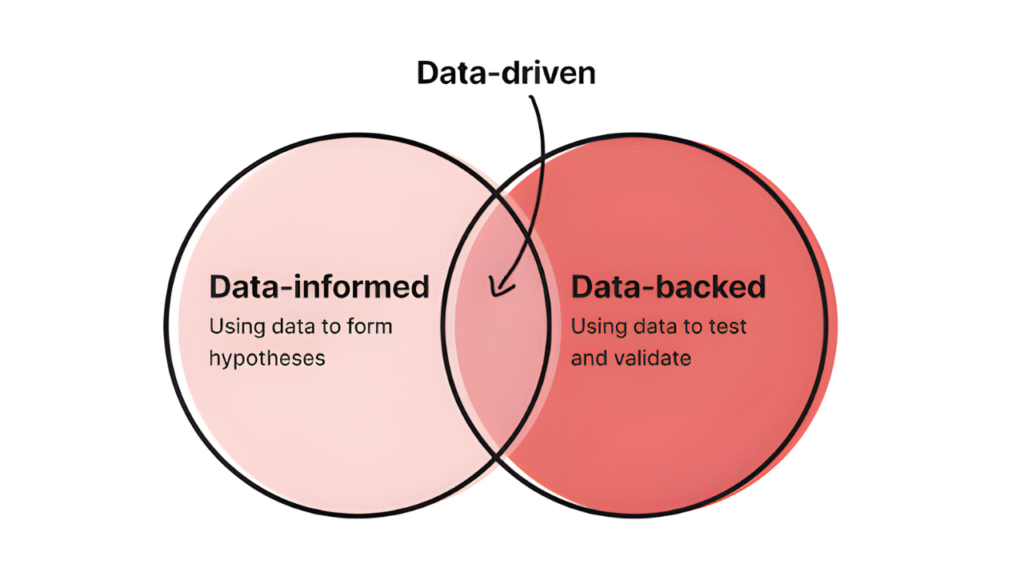
Decisions are guided by evidence, not opinion. Curiosity replaces assumption. And phrases like “Let’s check the data before we move forward” become everyday practice.
The data-driven culture also feels different. It’s calmer, clearer, and more transparent. People understand the why behind actions. There’s less posturing, fewer turf wars, and more collective ownership of outcomes.
How to create a data-driven culture?
Building a data-driven culture requires shifting three core layers inside an organisation:
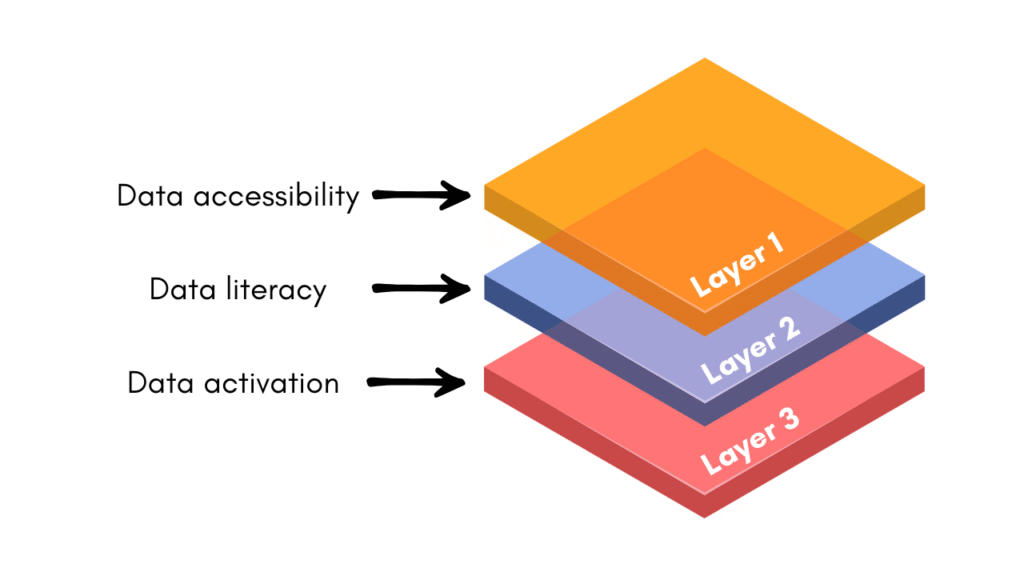
Layer 1: Data accessibility
The first step is to make the right data available to the right people. In most organisations, data is kept as a secret with limited access to selective individuals.
Data needs to be a shared resource. The departments and teams cannot utilise what they don’t have access to or don’t understand. So make the right data available to the right people and ensure it’s presented in a way that they understand.
Layer 2: Data literacy
Once the data is accessible, the next step is to ensure it’s not lost in the complexity. People don’t need to be data scientists, but they do need to feel confident interpreting and questioning data.
It doesn’t mean everyone has to be aware of technical jargon and attend countless training sessions. But they should be able to look at the metrics and ask:
- What does this really mean?
- What could explain it?
- What should we test next?
And if the teams need help with interpretation, they should have the psychological safety of asking. The team leaders and the data-driven leaders should lead by example and clearly communicate that it’s okay for the non-technical teams to ask for assistance.
Your role as a data leader
Try to bridge the gap between data and the rest of the organisation and business. You can do these two essential things:
Firstly, connect your data team to the business and its big picture. They should be fully aware of the short-term goals, long-term plans, the current company position and priorities. It helps them align their work with business goals.
Secondly, always present the data in a way that is understandable for everyone. Data storytelling is a major part of this role. It ensures every department of the company understands what the data is informing them.
You can learn how to tell stories with data in 4 easy steps that I have explained in the data storytelling guide.
Layer 3: Data activation
Now it’s time to put data into action. Make it your guide, your starting point for meetings, priorities, performance reviews, and strategies. It should become a part of the system, a feedback loop that guides, shapes and starts processes and helps you review and refine them.
Your role as a data leader
Lead by example. Start incorporating data into your department’s every decision. You might already be doing that, but present and position the numbers and statistics firmly to show their impact on your findings and solutions.
Encourage other departmental leaders to incorporate data into their decision-making process. Offer help and guidance in interpreting the data and navigating the technicalities for them.
The benefits of a data-driven culture
Incorporating data into your systems and truly having a data-driven culture is not easy, but it pays off if done right. Here is a list of a few benefits of a data-driven culture that outweigh the hassle of building it.
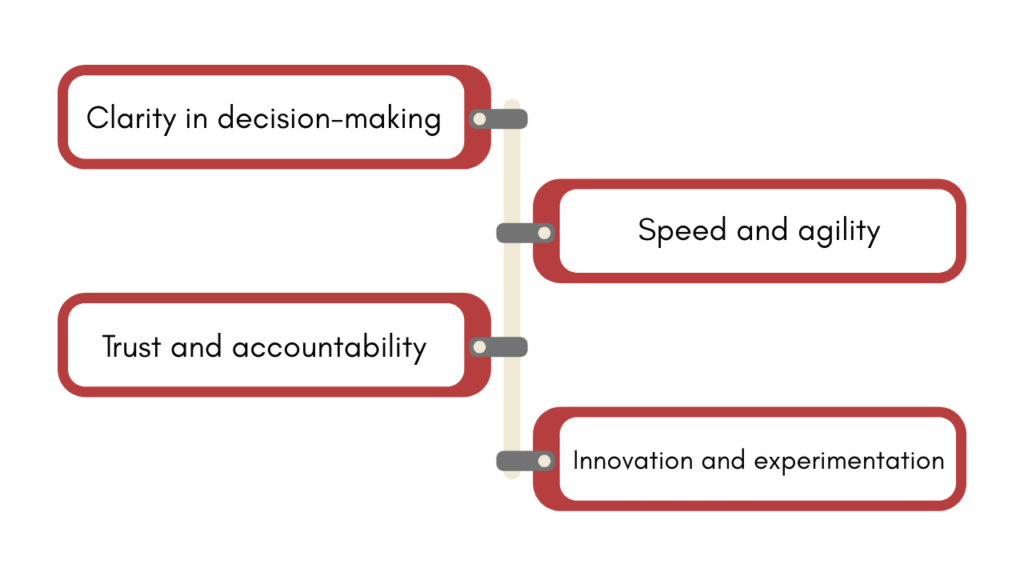
1. Clarity in decision-making
Data minimises the chaos and helps with evidence-backed decision-making. Teams no longer make decisions based on who speaks loudest or who has seniority. They focus on what the numbers say.
This clarity reduces friction. It builds confidence. People don’t waste energy defending opinions because evidence speaks for itself. For a leader, it means fewer circular debates and more forward movement.
2. Speed and agility
Change is the only constant. Data-driven organisations adapt faster because they operate with real-time awareness instead of delayed reaction. When everyone has visibility into what’s happening and why, the company can make the right decisions at the right time.
3. Trust and accountability
When data is shared openly, people understand how performance is measured and why certain decisions are made. It brings transparency in the system, which leads to trust and accountability.
4. Innovation and experimentation
Data helps make experimentation easy. Teams feel safe putting forward their ideas as they know they are data-backed. The chances of failure are significantly reduced. New ideas are proposed, tested and updated quickly, all informed by data.
The sense of safety that comes with experimentation ultimately leads to innovation.
Learn how to encourage innovation and be an innovative data leader.
Final thoughts
Creating a data-driven culture doesn’t mean adding another shiny tool or sending a company-wide memo. You need to make data visible, question assumptions out loud, and tie every decision back to evidence.
And most importantly, start from the top. Real change begins when the leadership starts to adopt the desired behaviour.







![How to use AI in spend analytics? [5 use cases]](https://feriotti.com/wp-content/uploads/2026/04/1-3.png)