
In the words of Peter Drucker, “Culture eats strategy for breakfast”.
And nowhere is that more true than with data.
Companies invest heavily in analytics tools, dashboards, and training sessions, hoping to turn data into a competitive edge and calling themselves “data-driven”. However, a few months in and they find that their data-driven culture didn’t stick.
Most organisations can launch a data-driven culture, but very few can sustain it.
So, what’s essential for maintaing it? Let’s start with the 4 most common reasons organisations fail in making data-driven culture stick, and 7 ways to build one that lasts.
Why data-driven cultures don’t last in most organisations
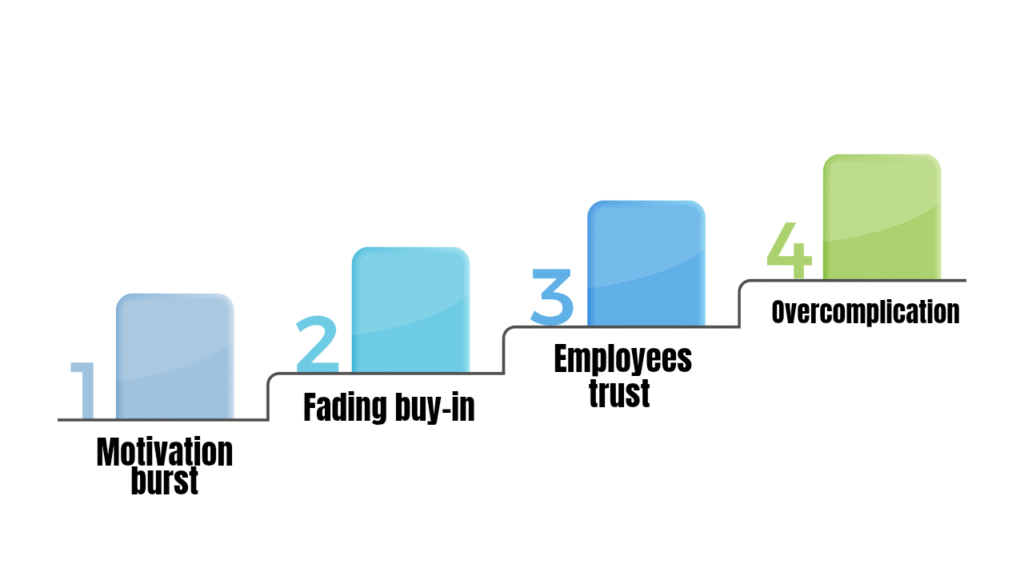
1. It’s fueled by a motivation burst
Call it market trend, FOMO, or a 2 AM motivation burst to change things for the betterment. The truth is, most companies treat data-driven culture as a project that once initiated would run on its own and find its way through their existing systems and processes.
Fast-forward after the launch, and you see the same existing patterns and processes; nobody cares about “data-driven culture” anymore except the data team. The motivation dies and with that the project and strategy of building a data-driven culture also dies.
2. Leadership buy-in fades
The leaders initiate the change, the dashboards are launched and the tools are purchased, the system is set up to make data accessible, and the data team follows through.
However, the leaders go back to their intuition for decisions. The teams notice and reciprocate the same energy. The system was in place, the data was accessible, butthe data-driven culture still didn’t stick because the leaders pulled back. Data becomes a showcase item of the company behind which the same old practices quietly went on.
3. Employees don’t trust the data
For non-technical teams, the data-driven change can be intimidating. When employees don’t understand how the data is collected, what it’s saying to them, its context, and how it connects to their everyday decisions, they follow their gut.
This is where data literacy comes in. However, most companies give one training session and never follow up. The learning stops, and employees lose interest.
Learn about the 3 layers of building data-driven culture and how it benefits an organisation.
4. Overcomplicating it
Some companies go a little too hard on the 2 AM motivation and overcomplicate the data-driven culture with too many dashboards, KPIs, metrics and tools. The data team delivers, but it gets overwhelming for the rest of the departments.
Employees find it excessive and get frustrated, which builds a negative energy around the change, which was already not so pleasant for everyone.
What’s essential for making a data-driven culture stick
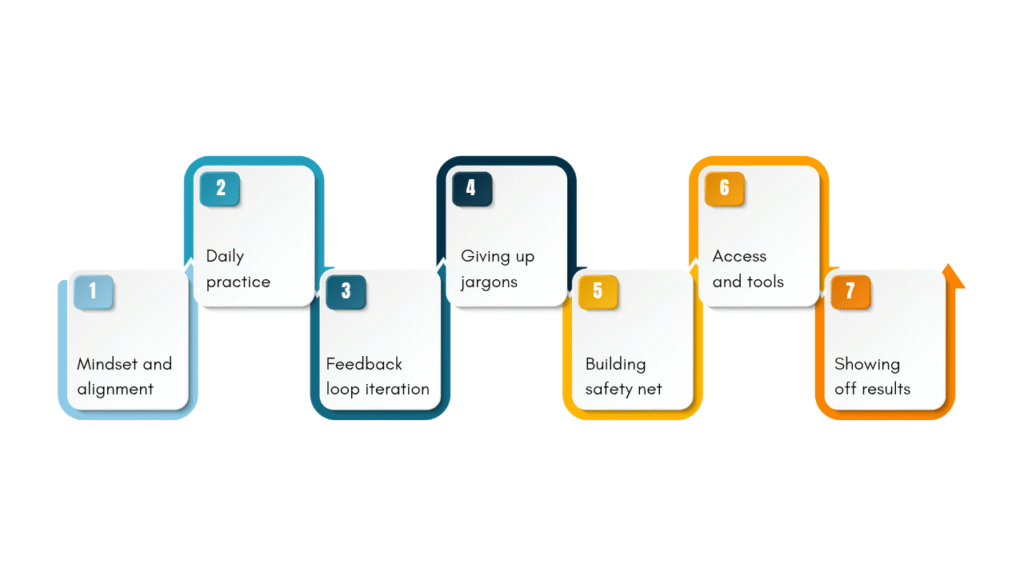
1. Start with the right mindset and leadership alignment
Instead of running after the shiny object syndrome, start with the mindset of driving positive change in your company by building a data-driven culture.
Learn what data-driven culture actually means: beyond tools and dashboards, what it really looks like for every member of the company. It will help you strategise and maintain the culture change more efficiently.
The change starts at the top. Get all the departmental leaders on board and establish processes and systems to integrate data into their everyday decisions. If you can set follow-ups or check-ins among leaders on their personal and their team’s data progress, that would be even better.
2. Make it a daily practice
Don’t reserve the data for big decisions and new launches. Make it a part of everyday practice. Use it to guide simple everyday tasks. And again, the practice will be perpetuated by the leaders.
Make it a norm to refer to data before diagnosing a problem or presenting a solution. What data tells you will be your guide for your next step.
3. Iterate the feedback loop
Set up a feedback system to receive bi-weekly or monthly feedback from every team and department. Encourage employees to put forward their complaints, what’s working and what doesn’t fit with them and why. This data will guide your further actions and bring your data-driven culture to perfection, where it seamlessly blends with every department and becomes the norm.
And notice how this feedback loop is a living example of leaders following a data-driven culture.
4. The data team should give up jargon
No wonder the data team will be helping every department to interpret and analyse the data. They will also be giving training and demos for tools and dashboards. They are the primary trainers and advocates of a data-driven culture in any organisation.
And a thing about us tech pros is that we love our savvy jargon. However, at this stage, it’s essential that we drop our tech-savvy language and communicate with other departments in simple and clear terms.
If not, the data-driven culture will die before its first breath because nobody understands it except the data team.
5. Create a safety net for questions, confusion and failures
When integrating a new culture (especially one centred on data), you can’t expect everyone to get it right from day one. People will hesitate, make mistakes, or misinterpret numbers. That’s part of the learning curve. What matters most is how your organisation responds to that confusion.
Create a safe space where employees feel comfortable asking, “Am I reading this right?” or “Can someone walk me through this metric?” without fearing judgment or backlash.
Encourage managers to normalise questions and celebrate curiosity. When people feel safe to admit uncertainty, they’re far more likely to engage with data rather than avoid it.
6. Simplify access and tools
Keep your tools, dashboards and metrics as simple as possible, at least in the start. Do not switch tools or make dashboards complicated. Let everyone get familiar with this new change and learn to work with it. Once data has become your company culture, then you can slowly add on to it (if you want).
7. Show off the results
If you want a data-driven culture to stick, people need to see that it’s working.
Visibility builds belief. When teams witness how a data-backed decision improved revenue, reduced churn, or saved time, it reinforces the value of using data in the first place.
Make those wins public. Highlight them in team meetings, internal newsletters, or all-hands sessions. Call out the teams and individuals who used data effectively. This small practice builds momentum and encourages everyone to do the same.
Final thoughts
Creating a lasting data-driven culture means addressing why most fail: lack of leadership follow-through, unclear data, jargon, and complexity.
By aligning leaders, simplifying tools, building feedback loops, and showcasing wins, you make data part of daily decisions. When these steps are consistently applied, the team picks up the new integration, and it starts to become a norm. And what turns into a norm becomes a part of the culture.
And that’s how you can make data-driven culture stick.







![How to use AI in spend analytics? [5 use cases]](https://feriotti.com/wp-content/uploads/2026/04/1-3.png)