
You spend hours digging into data. You prepare charts, numbers, explanations. Then in the meeting, leaders lose focus halfway. They want the answer, not the journey. This is where most data professionals struggle when stepping into leadership.
You know the insights are valuable, but if you can’t communicate them clearly, they get lost. The result? Missed opportunities, delayed decisions, and frustration on both sides.
The solution is simple. Lead with the point. That is the power of the BLUF method. It helps you cut the noise, earn attention, and drive action.
What is BLUF?
BLUF stands for Bottom Line Up Front. It’s a communication style where you start with the most important point right away. No buildup. No suspense. Just the answer.
It started in the military and intelligence world where clarity and speed were a matter of survival. They didn’t have the luxury to sit through endless background before getting to the point.
The formula is simple: conclusion, then supporting evidence, then context.
Most of us do the opposite. We build a long story, share every detail, and finally reveal the point at the end. That’s why people lose interest.
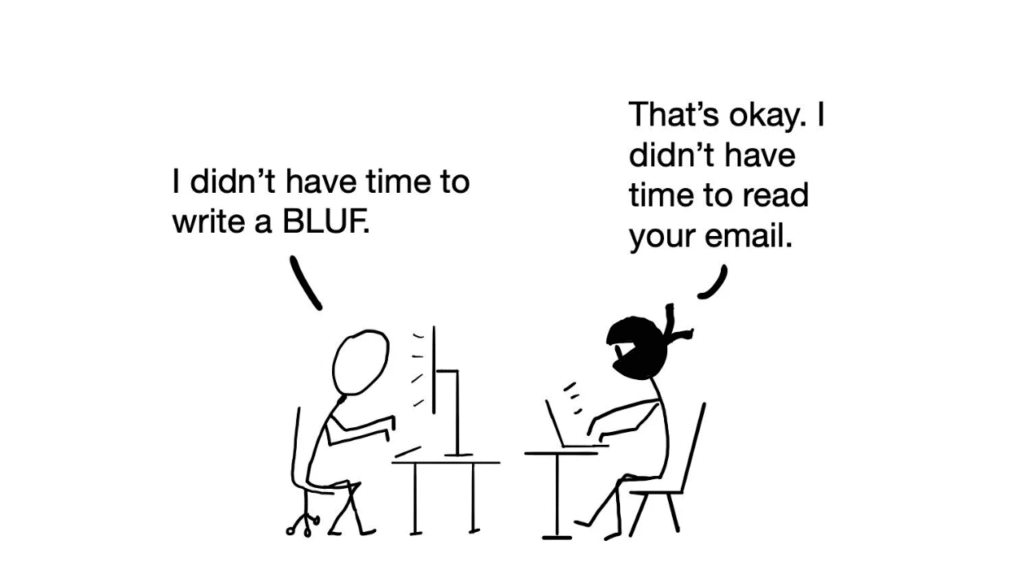
Why BLUF Matters for Data Leaders
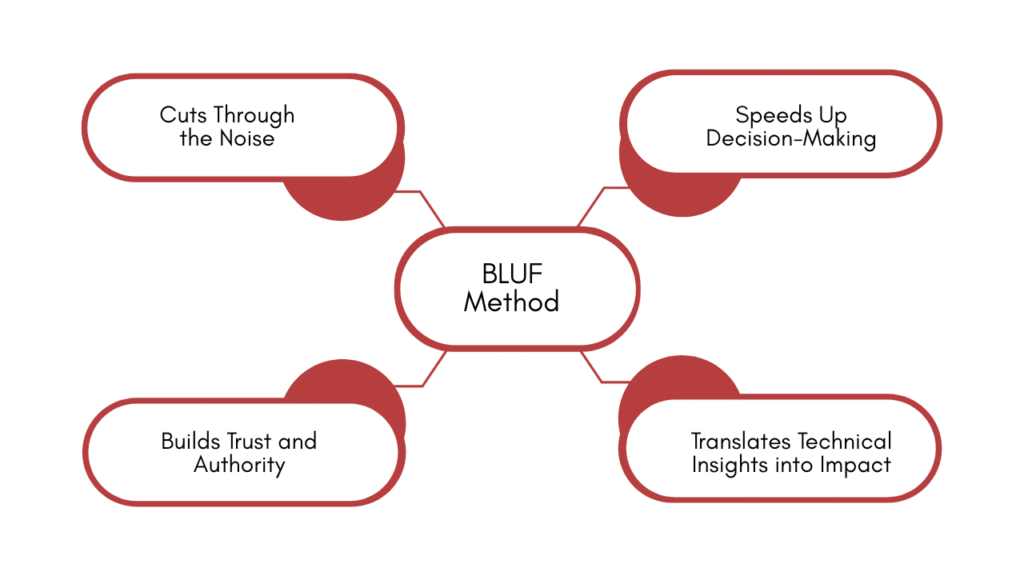
a. Cuts Through the Noise
Data leaders deal with endless dashboards, metrics, and reports. The flood of numbers can overwhelm anyone. When I use BLUF, I clear the clutter. I give the room one clear takeaway before they start drowning in detail. That keeps everyone focused.
b. Speeds Up Decision-Making
Executives don’t have time to untangle long stories. They need to know what’s at stake right now. By putting the bottom line first, I give them exactly what they need to move forward without delay. Decisions stop dragging.
c. Builds Trust and Authority
When I show up with clarity, people trust me more. They see me as someone who respects their time and knows what matters. That’s how authority grows. Not by talking longer, but by making every word count.
d. Translates Technical Insights into Strategic Impact
I’ve seen brilliant analysis fall flat because it stayed buried in jargon. With BLUF, I translate the insight into language leaders care about. Instead of “our regression model shows correlation,” I say “customer churn is costing us 15% in revenue.” That’s when people listen.
Common Mistakes with BLUF
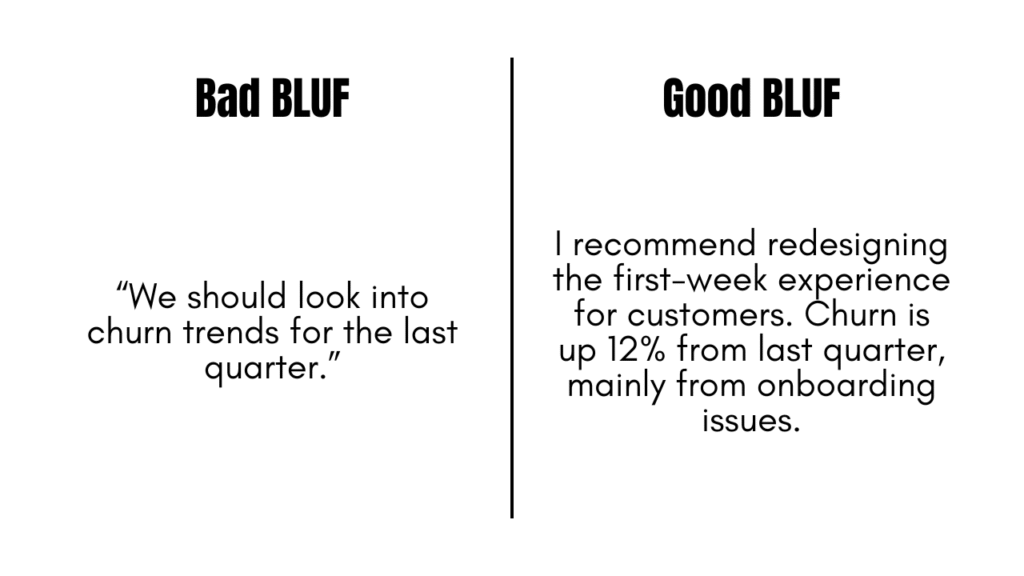
- Being too vague: Dropping a line like “We should look into this” isn’t a bottom line. It’s an open loop with no direction.
- Using heavy jargon: If your first sentence sounds like a textbook, no one will stick around to hear the rest. Keep it plain and clear.
- Skipping the context: A strong BLUF gives the answer first, then backs it up. Without context, people won’t trust or act on what you say.
- Thinking it’s only for execs: I use BLUF everywhere: with my team, in peer updates, and even in Slack messages. Clear communication helps at every level.
How to Build the BLUF Method Habit as a Data Leader
- Rewrite one email a day: I started small. I’d take one email and force myself to put the conclusion at the top. It felt odd at first, but within a week my updates became sharper and responses came faster.
- Summarize your analysis in one sentence: Before diving into slides or charts, I challenge myself: can I say the whole point in one sentence? If I can’t, I know I’m not ready to present yet.
- Coach your team to lead with “so what”: I ask my team, “What’s the takeaway here?” If they can’t say it upfront, the rest of their work loses impact. Once they start practicing, their confidence shoots up.
- Use a simple template: My go-to structure is: bottom line → why it matters → what’s next. It keeps my updates tight and action-driven. No one walks away wondering what I just said.
Also read: How to influence at work as a data professional?
Wrapping Up: BLUF Method
The hardest part of BLUF isn’t writing it. It’s the pause before you open your mouth. Most people rush into details. Here’s a trick: give yourself three silent seconds before you speak. In those seconds, nail your bottom line in your head. Then lead with it.
And if you’re navigating that leap into leadership, I mentor data professionals who want clarity, confidence, and influence with my 8-week mentorship program. Let’s talk.

![7 Practical ways to better use AI in CRM [ CTO’s guide]](https://feriotti.com/wp-content/uploads/2026/02/1-3.png)