You walk into a leadership interview knowing you’ve got the skills, yet the pressure makes it easy to stumble. The questions dig deeper, the expectations are higher, and suddenly it’s not just about what you’ve achieved but how you lead.
This guide shows you how to prepare for a leadership interview with clarity, confidence, and impact. It covers everything from reflecting on your leadership style and researching the role to crafting targeted stories and practising with confidence.
How to prepare for a leadership interview
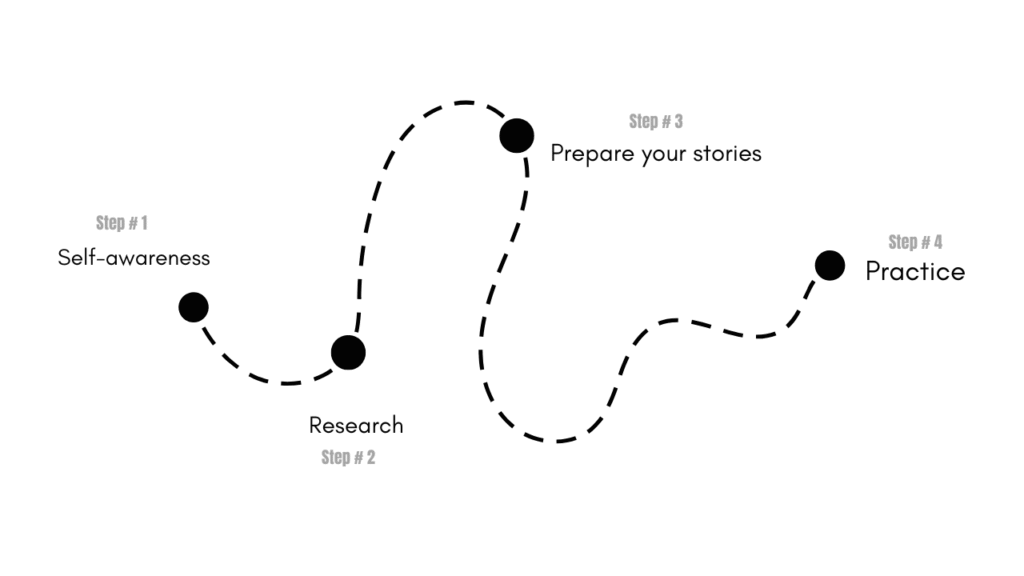
Who you are as a leader
Here’s the caveat: no matter how well you prepare for the interview and how many tips and tricks you watch on the internet, you will not have the peace of mind and clarity if you skip this step. Self-awareness is the foundation of your preparation.
Reflect on the difficult situations and challenges you’ve faced as a leader. Ponder over what skills you used, and how you navigated the situation. If you haven’t led before, think of the scenarios where you demonstrated leadership skills, maybe you presented a solution to a problem, coached a junior, or helped resolve a conflict.
Know your leadership style and values. It’ll give clarity on your leadership approach, and you can connect them to example stories. I’ve done a deep dive on 6 leadership styles and how to identify yours. If you’re unsure of your style, it’ll help you out.
Once you’ve noted everything, pair each situation with a leadership skill, your leadership style or values.

Research the role and the company
A common challenge in leadership interviews is what to say and what to leave. There’s a limited opportunity to share your expertise and skills, and of course, we cannot share everything.
That’s the problem this research solves.
Start by dissecting the job description and thoroughly researching the company. Even better if you can get in touch with someone who already works there, they will give you the insights into their work culture, priorities and current company goals, and that’s the information we are looking for.
Filter through your stories
With all the information you have about your leadership journey and the company, you can start filtering out your answers and stories.
The company and role research tells you what to share and what to leave. The most important information is what aligns with the company culture, mission, current situation and role requirements, a.k.a what the interviewer wants to hear.
Filter out the scenarios that align with your leadership style, values and company parameters. Have one situation per category, and you will have a decent list of highly targeted examples that you can share.
Prepare a story
Let’s now turn those examples into impactful stories. We don’t say, “I coached a junior”. We develop a story to show what we did, how we did it, and what the result/impact was.
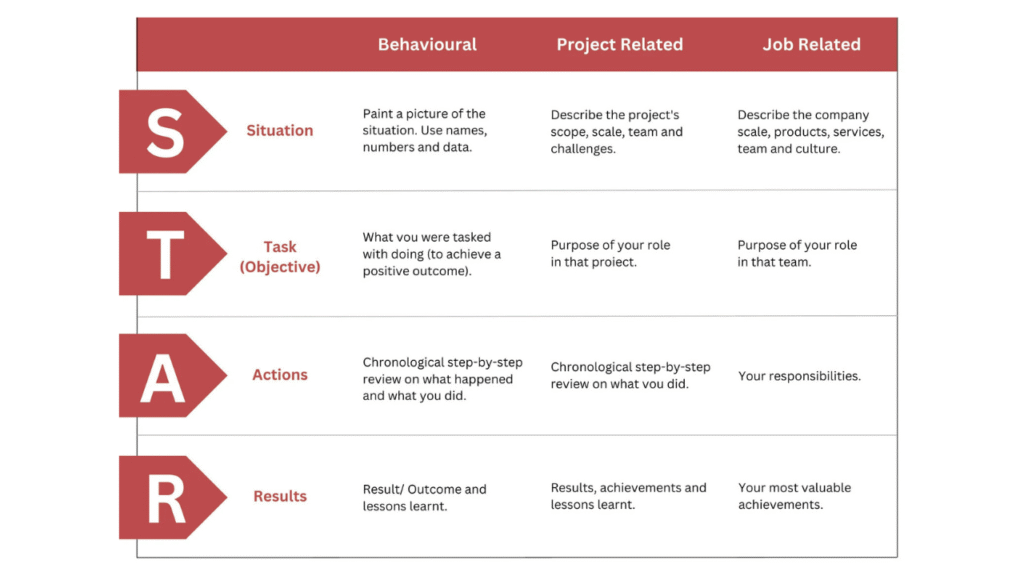
The STAR method works the best here.
- S: Situation (context)
- T: Task (the goal)
- A: Action (the steps you took)
- R: Results (measurable impact)
According to the STAR approach, the coaching example looks like this: “I coached a junior analyst who was struggling to interpret performance metrics. My goal was to help them deliver accurate reports independently. I guided them through the key metrics, explained how to identify trends, and provided feedback on their drafts. Within a few weeks, they were confidently delivering client-ready reports, which improved our team’s efficiency and reduced review time.”
Practice leadership interview questions
By now, you’re already ahead of your competition. You can feel clarity and confidence guiding your approach. Let’s take a step forward and practice common leadership interview questions.
I have already discussed in detail the 18 leadership questions and how to answer them, so check that out.
Prepare questions for the interviewer
Most people don’t prepare for the last part of the interview, when it’s their turn to question. It’s a missed opportunity to understand their expectations and show your genuine interest in the company.
Ask about team dynamics, how success is measured for leaders, and current challenges the department is facing. You can also ask what leadership qualities are most valued in their culture and how the company supports leadership development.
Practice
Lastly, practice the stories and answers you’ve prepared. Get a friend to practice a mock leadership interview. If not, then record yourself to see your progress or stick to the good old method of practising in the mirror.
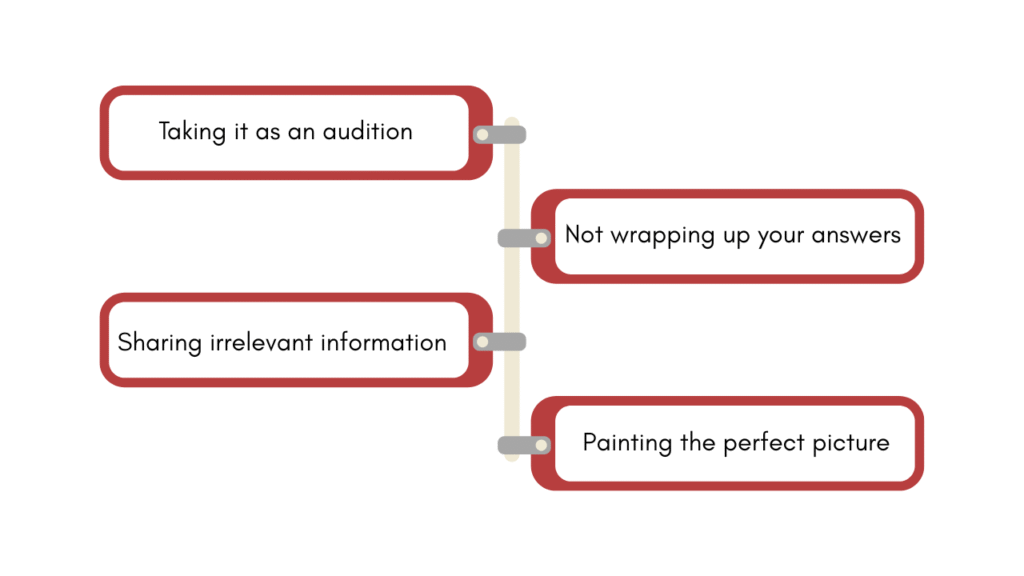
Leadership interview mistakes
Taking it as an audition
The mindset that fails a lot of good candidates is thinking of the interview as an audition where they are judged and evaluated. Anxiety creeps in, and it shows in their body language and communication.
But leaders don’t do auditions. Leaders participate in conversations. Take the interview as a setting where you, as a leader, convince the other party. Your body language, dressing, confidence and communication should show the interviewer that they are talking to a leader. Be relaxed and calm so your presence can exude confidence and charisma.
Not wrapping up your answers
Never make the interviewer guess what’s in it for them in your answer. Whether you’re telling a story or stating a simple answer, always drive your point home by concluding the result and how it connects to the company and department.
Sharing irrelevant information
The interview is your chance to show what you’ve got, BUT, you have limited time. And in that limited time, you can only share limited information. The biggest mistake in leadership interviews is sharing the stories and demonstrating values and skills that are of little to no relevance to the company.
We have already discussed how you can curate what to share that’s highly targeted to the company you’re interviewing for, so stick to that.
Painting the perfect picture
Setting every example as a win-win situation makes it sound staged. Be real, talk about the challenges you faced and how you overcame them. If something was challenging, acknowledge it. It shows authenticity and builds trust.
Final thoughts
I hope this guide helps in your interview prep for the leadership role. Remember to be relaxed and let your inner leader take charge. That’s how you win in leadership interviews.
And if you belong to the data sector and feel like you’re not ready for the role yet, mentorship can make that happen. I mentor data professionals through one-on-one mentorship. We work together to build you up from the ground and prepare you for the leadership role you’re aspiring to.
Learn more about data mentorship.


![7 Practical ways to better use AI in CRM [ CTO’s guide]](https://feriotti.com/wp-content/uploads/2026/02/1-3.png)