
Inspiration is a form of influence. And you might think that influence requires power or authority, that to inspire your team, you need to be the most powerful or intelligent person in the room. But the truth is quite the opposite.
Often, leaders aren’t the smartest people in the room. Instead, they lead a group of individuals who are highly skilled in their respective domains. In other words, everyone in the room might be smarter than you. But that doesn’t make you any less capable. You’re highly skilled in your own domain, leading people from different fields and backgrounds toward a common goal, inspiring them, motivating them, and navigating the challenges that stand in the way of your mission.
We’ve established that inspiration doesn’t come from a place of authority or power. Then what characteristics make a leader truly inspiring and motivating? Interestingly, the answer is “soft skills”. Things like empathy, active listening, understanding your employees, honesty, being observant, and self-awareness are what truly make a leader inspiring.
Here are 7 actions to incorporate into your daily practice to become an inspirational leader.
7 ways to be an inspirational leader
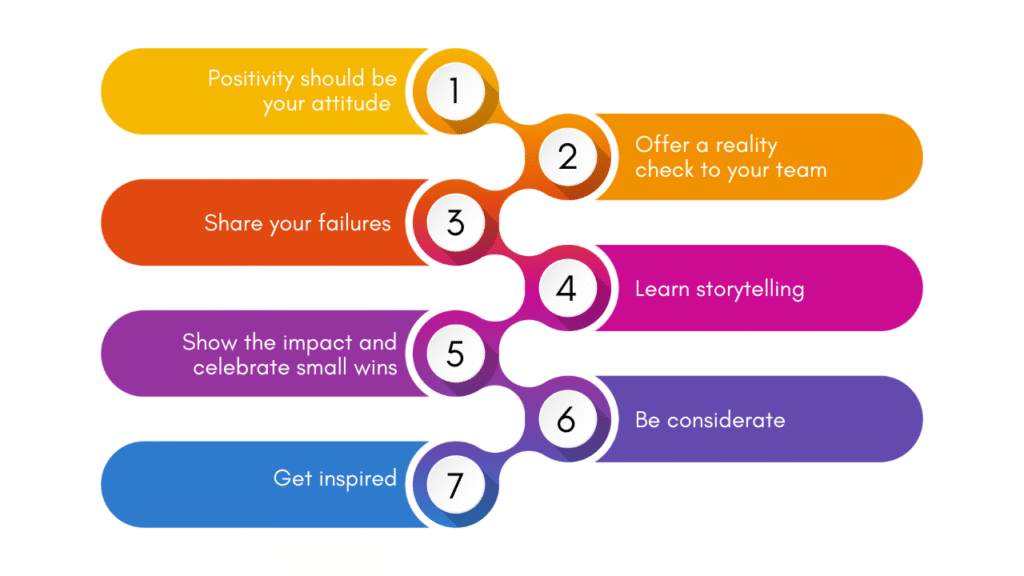
1. Positivity should be your attitude
Your overall energy, including confidence, posture, body language and way of speaking, makes up your attitude that sets the tone for the entire team. People are inspired by positive and charismatic personalities that radiate good vibes and hope.
It doesn’t mean you have to be overly cheerful and out of your personality, but you should be welcoming and create a sense of safety where employees feel comfortable speaking up and sharing.
Being positive also doesn’t mean that you sugarcoat. However, you do need to stay encouraging, solution-oriented, and forward-looking no matter the circumstances. As a leader, you have the power to set the tone and energy for everyone. If you want your team to stay motivated and inspired, you need to embody that positivity yourself.

2. Offer a reality check to your team
Connecting back to our first point, setting a positive vibe and inspiring your team doesn’t mean hiding challenges or setbacks from them. Be transparent. Let them know the real situation so they have a clear sense of what’s going on.
The key is to stay solution-oriented. After stating the facts, don’t dwell on how bad or difficult things are; instead, guide the conversation toward finding a solution.

3. Share your failures
How would you feel about a story filled only with wins? A story where the main character easily gets what they want, achieving their goals with a smooth glide. No failures, no hurdles, no challenges. Just effortless success.
It sounds too good to be true, because it is. Failures, challenges, and obstacles are a part of everyone’s journey. And how you battle through them is what makes the story truly inspirational.
So don’t be afraid to share your raw journey. Talk about the challenges and share how you faced them, what you learned, and how you moved forward despite the odds.

4. Learn storytelling
Sharing your failures and lessons is one thing; telling them in a way that moves people is another. The difference lies in storytelling.
A good story makes people feel what happened. It helps your team see the real you: your struggles, your growth, and the mindset that got you through. When told the right way, your story becomes a mirror for others to see what’s possible for them.
Instead of listing what went wrong or right, take your listeners into the moment. Describe what you felt, thought, or noticed to create an experience. In the end, leave people with a sense of direction or inspiration. What’s the one thing you want them to remember or apply from your experience?

5. Show the impact and celebrate small wins
Nothing inspires people more than seeing the difference their work makes. When your team understands how their efforts contribute to the bigger picture, it builds pride, ownership, and motivation.
Share real examples of how their work has created value, solved a problem, or moved the team closer to its goals. When people see the visible impact of their contributions, they care more deeply about the mission they’re part of.

6. Be considerate
In other words, have empathy.
To inspire others the right way, you need to understand where they’re coming from. And the first step is to listen to your team. Create a safe space for them to share their challenges, frustrations, and ideas.
Once you know the other side’s story, you can lead with awareness and motivate in ways that resonate with them.
Make it a habit to check in regularly, not just about tasks but about how people are doing. Ask questions, listen without interrupting, and act on what you hear. It’s a simple practice that turns everyday leadership into inspirational leadership.

7. Get inspired
You cannot fill someone else’s glass when your own glass is empty.
The key to being inspirational is to be inspired.
As a leader, your energy, creativity, and outlook directly influence your team. To keep that spark alive, you need to continuously seek inspiration, whether it’s through learning, connecting with other leaders, reading, or simply taking time to reflect.
Surround yourself with people, ideas, and experiences that challenge and excite you. When you stay curious and inspired, it naturally reflects in the way you lead and the energy you bring to your team.
Also read: Time management for new managers and leaders

Also Read: How To Be An Innovative Data Leader? Styles and Traits
The journey of an inspirational leader
Before you leave, I want you to think about an inspirational leader (not necessarily from work) who’ve inspired you the most. What made them stand out? Chances are, it wasn’t their job title or authority, but their attitude, empathy, resilience, and the way they made you feel seen and valued.
Inspirational leaders don’t rely on power; they lead with purpose. They listen, they learn, and they lift others up. And most importantly, they never stop growing themselves. Want to be an inspirational leader? Let’s talk.

![7 Practical ways to better use AI in CRM [ CTO’s guide]](https://feriotti.com/wp-content/uploads/2026/02/1-3.png)