
Most data professionals step into leadership and realize the hardest part isn’t managing tools or projects. It’s giving the team a clear sense of where they’re going. Without a leadership vision, every decision feels reactive. The team works hard but struggles to see the bigger picture. Morale drops.
Alignment slips. You’ve probably felt that frustration too. The solution is simple but not easy: craft a leadership vision that connects purpose, values, and outcomes.
In this blog, we’ll break down exactly what makes a strong vision in tech and how you can start shaping one that inspires your team.
What Is a Leadership Vision (and What It’s Not)
A leadership vision is a clear picture of the future that connects three things: purpose, people, and performance. It’s the reason your team does the work, the way you rally them around it, and the results you aim to achieve.
But here’s the tricky part. Many leaders confuse vision with other things. Let me clear that up:
- It’s not a slogan. A clever one-liner won’t move your team forward.
- It’s not a roadmap or OKRs. Those are tools for execution.
- It’s not predicting the future. You don’t need to know every detail ahead.
The key difference is simple: vision sets direction, while roadmaps and goals outline the steps. Without direction, even the best plans lose meaning.

The Core Anatomy of a Strong Leadership Vision

1. Purpose (The Why)
Ask yourself: why does your team exist? What’s the bigger problem you’re solving? For example, a data team isn’t just there to “make reports.” Its purpose might be to “turn data into decisions that drive the business forward.” That’s a lot more energizing than cranking out dashboards.
2. Values (The How)
These are the principles that guide how the work gets done. Maybe your team values transparency, speed, or experimentation. Whatever they are, they shape how people show up every day. Without values, a vision feels hollow because no one knows what behaviors support it.
3. Ambition (The Where)
Vision needs a bold future to aim at. Not wild fantasy, but a believable stretch. For example, saying “we’ll make data accessible across the company” is ambitious yet possible. If you only aim for the status quo, don’t expect people to feel inspired.
4. Relevance (The Who)
If your vision doesn’t connect to both the company’s goals and your team’s personal aspirations, it won’t stick. Show people how their work matters to the bigger picture and to their own growth. That’s when they feel invested, not just compliant.
5. Clarity (The What)
Finally, keep it simple. Drop the jargon. If your vision sounds like a press release, you’ve already lost your team. A good test? If your team can repeat your vision in their own words without butchering it, you’ve nailed it.
How Tech Leaders Can Craft Their Vision
So how do you actually put a vision together without it sounding like corporate fluff? I’ll break it down into steps that have worked for me and the leaders I mentor.
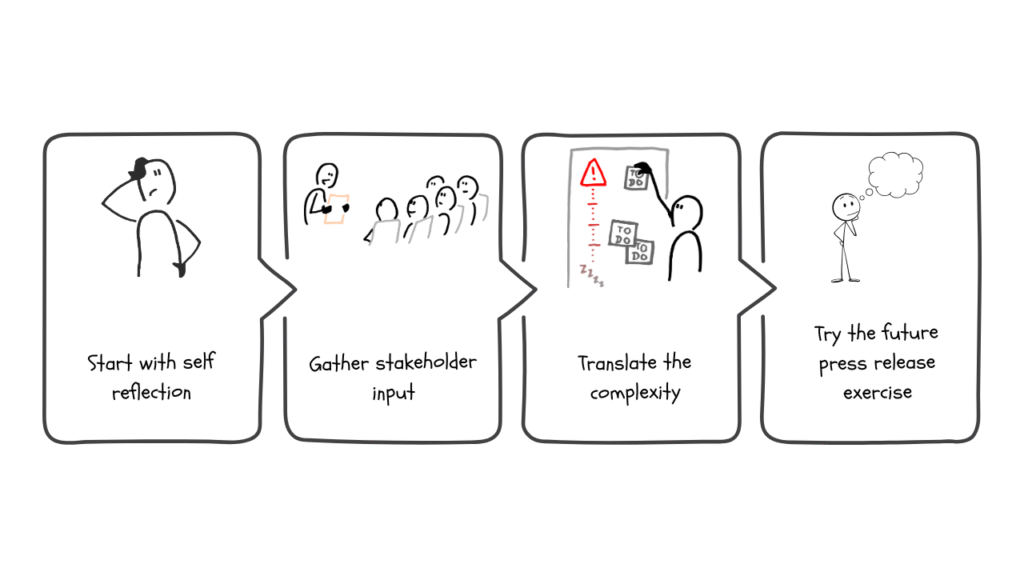
1. Start with self-reflection
Before you write a single word, ask yourself: what change do I want to see in my domain? Maybe you want analytics to be more trusted. Maybe you want AI to stop being treated like a shiny toy and start being applied responsibly. Your vision has to start with what you believe needs to change.
2. Gather stakeholder input
You can’t build a vision in isolation. Talk to your team, your peers, and your executives. Ask what frustrates them, what excites them, and where they think the biggest opportunities lie. You’ll be surprised how much clarity you get when you connect the dots across different perspectives.
3. Translate the complexity
This is where a lot of technical leaders trip. A vision isn’t about showing how smart you are. It’s about making outcomes relatable. Instead of saying “reduce ETL pipeline latency,” try “make data available to everyone when they need it.” If your non-technical colleagues can’t repeat it, you need to simplify.
4. Try the future press release exercise
Imagine your team in three years has crushed it. A journalist is writing a press release about what you achieved and why it mattered. Write that release yourself. It forces you to put your vision into clear, concrete words that anyone could understand and it’s a fun way to stretch your imagination.
Wrapping Up: Leadership Vision in Tech
Most new tech leaders feel the pressure to prove themselves fast. You’re juggling expectations, managing projects, and trying not to lose your team’s trust in the process. Without a vision, it all feels like firefighting. The truth is, you don’t need to have every answer right now, you need to show a clear direction.
This is exactly where I help data professionals make the leap into leadership. I work with you to clarify your vision, communicate it with confidence, and turn your team into a partner the business can’t ignore. If you’re ready to step into leadership with clarity and impact, let’s talk.

![7 Practical ways to better use AI in CRM [ CTO’s guide]](https://feriotti.com/wp-content/uploads/2026/02/1-3.png)