You’ve finally got what you’ve wanted! You’re growing! But wait, you don’t seem happy? What? You feel you don’t deserve it? Does it feel too much?
What an irony! We often hold ourselves back from our growth, saying we’re not ready. But that’s actually imposter syndrome that considers opportunity as risk. Risk of failure, the fear of leaving your comfort zone and adjusting in a new role with new responsibilities. And imposter syndrome in leadership is very common.
In this article, I’ll dive deep into what imposter syndrome looks like in data leadership and how you can effectively overcome it so you don’t halt your own growth.
What is imposter syndrome at the brain level? Why do you feel it?
Imposter syndrome is common across all fields at almost all stages of life. Whether you’re starting a new job, switching careers, accepting a promotion, or getting into a leadership role, it’s likely to feel out of your comfort zone even though its growth. You feel a sense of unfamiliarity with the very thing you wanted. Reddit is full of leadership imposter stories.
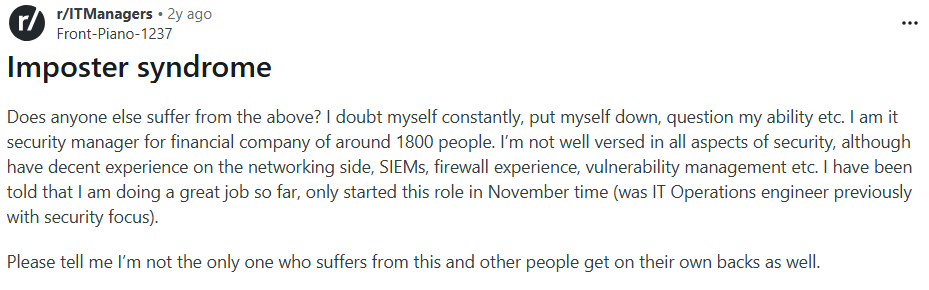
Image taken from a Reddit thread.
The change of role, new environment, new people, and new responsibilities put our brains on high alert. And as we all know, our brains are wired for survival and not growth, it starts to give us anxiety, nervousness and all the gloomy feelings to keep us safe.
“What if I mess up?”
“What if I fail? It would be so embarrassing.”
“I don’t have the right skills.”
“I don’t know enough to be in this role, what if someone finds out my shortcomings?”
“Am I dumb?”
“Should I run away? They’ll kick me out themselves if they get to know how I’m doing.”
This is our brain’s effort to stop us in order to keep us safe. Once you understand that, it’s easy to manage imposter syndrome and once you understand it in your own context, it gets easier. And that’s what we’re doing in the next heading.
Also read: How to lead a team as a first-time manager in tech
Imposter syndrome in data leadership
When you rise from the technical depths of your individual contributor position to a leading or managing role, the shift is huge, I must admit. Going from someone who’s glued to their laptop screen with their fingers and mind working hard all day, running on caffeine and socialising with machines more than with humans, to becoming a person with the spotlight is scary.
Suddenly, the roles are reversed, the hours you would spend fighting and co-creating with a machine are now spent with humans. Suddenly, you’re required to talk a lot with colleagues from all hierarchies and departments.
Your team is coming to you with technical questions, and the upper management is handing you projects and asking you for the strategy, while you are struggling to juggle everything at once. And among all these new responsibilities, the software, the code and the coder are all lost somewhere.
Do you see what’s happening here? Data leadership is dual-faceted. One side is data, the technical side, and the other side is leadership, the extroverted side, as I call it. The first part is where we are safe, we’re confident in that, but the second part is what fuels all the imposter syndrome in new and aspiring data leaders.
Let’s see how you can overcome the imposter within you.
How to overcome imposter syndrome in leadership
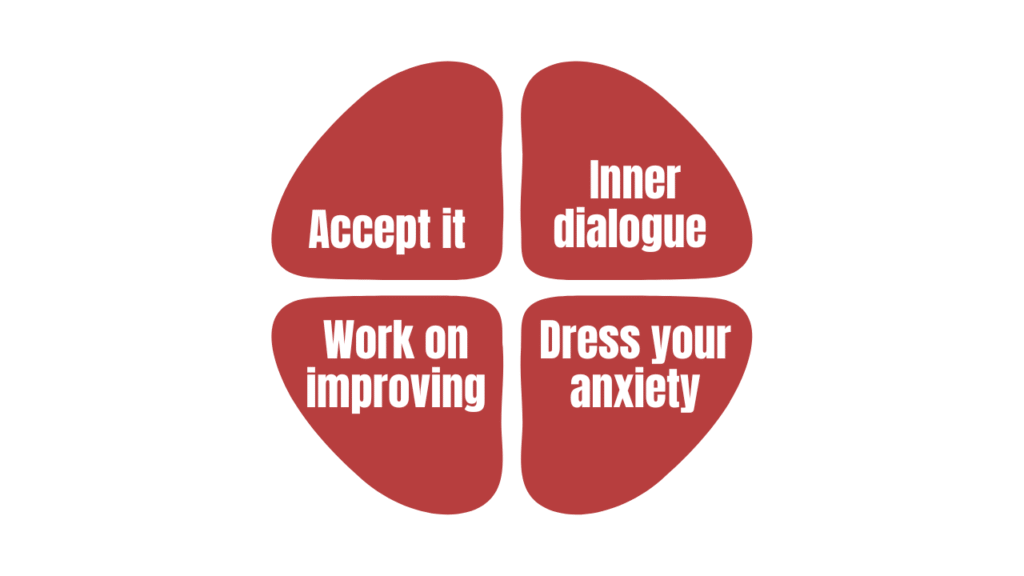
1. Accept it
Recognising the problem is the first step to solving it. You can’t manage your imposter syndrome if you haven’t made peace with its presence.
It’s very natural, and everyone at some point in their life has experienced imposter syndrome, especially at work. So if you’re denying it for whatever reason, you’re doing more harm than good.
2. Start an inner dialogue
Now we will try to understand the root cause of your imposter syndrome.
Ask yourself what you’re feeling and why? Below is an exemplary monologue. Take a look.
“I’m feeling anxious, it feels like I’m about to fail?”
“And why am I feeling that way?”
“It’s a new thing, I’ve never done this before.”
“There’s a first time for everything?
“I don’t feel qualified enough for it. What if I mess up?”
“Failures are a part of the process. Learn from them and move on. And someone saw potential in me that’s why I’m here today.”
“But my communication isn’t that good.”
“That’s fine. I’ll work on it. I’ll improve it.”
Keep going back and forth. Identify the feelings and the fears. Give yourself proof and reasons as to otherwise through past achievements and learnings. If not, create a plan to improve. It gives your brain a direction and lowers anxiety.
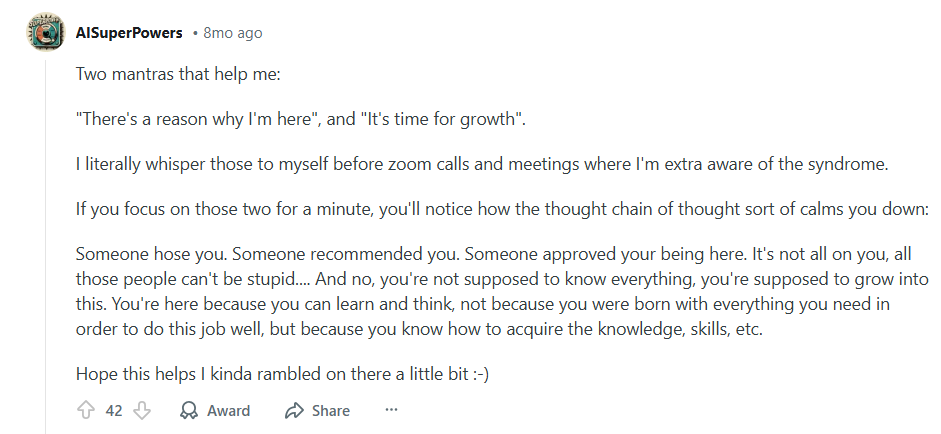
Image taken from a Reddit thread.
You might face your self-beliefs here. It’s important that you focus on possibilities and actions. Speak from your potential and not from your limitations. Reason yourself as to why your negative self-beliefs are wrong.
If you think, “It’s too much for me, I can’t do it”. Ask yourself why and then reason yourself as to how you can do it.
3. Work on improving
Your internal monologue will reveal a few gaps in your skills. It’s important that you start taking action towards it. Even the process of improving will lower your imposter syndrome. Your brain sees the preparation and it doesn’t feel threatened by what it once found unfamiliar.
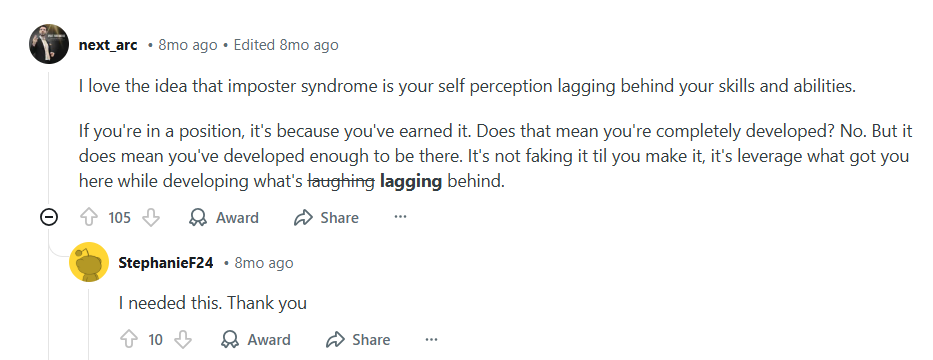
Image taken from a Reddit thread.
And if you struggle to bridge a gap by yourself, you can always use the help available to you. I’ve put together a practical, no‑fluff guide, drawing from my personal experience, designed exactly for this transition. It gives you the tools, frameworks, and mindset shift to go from a high‑performing individual contributor to a confident leader.
Grab the Foundations of Leadership for Nerds e-book, it’s meant to guide the tech and data leaders who’re struggling to find peace in their new role, have a hundred items on their to-do list and feel lost and overwhelmed in the process.
4. Dress your anxiety as excitement
Imposter syndrome comes with anxiety. Our nervous system triggers the same response when we are excited and nervous. The heart rate increases, you feel sweaty and get a weird feeling in your stomach. The difference is how your brain interprets the situation.
If you tell yourself you’re excited for the presentation, you’re ready to show them your talent and successfully convince yourself, congrats! You transformed your anxiety into excitement. And the best part is that excitement boosts your confidence and prepares you to step up.
Do it scared…do it anyway
I know there are so many negative feelings and thoughts in your mind at the moment. But I want you to know that it’s temporary. Your imposter syndrome at your work will go away in some time. But you can’t let it take over and withdraw from your growth and potential. Do it scared, do it terrified, do it anyhow. Your future self will thank you for your persistence.
Learn more about Foundations of Leadership for Nerds to see if it can help you go from a confused new lead to a confident, composed leader who knows what they’re doing.

![7 Practical ways to better use AI in CRM [ CTO’s guide]](https://feriotti.com/wp-content/uploads/2026/02/1-3.png)