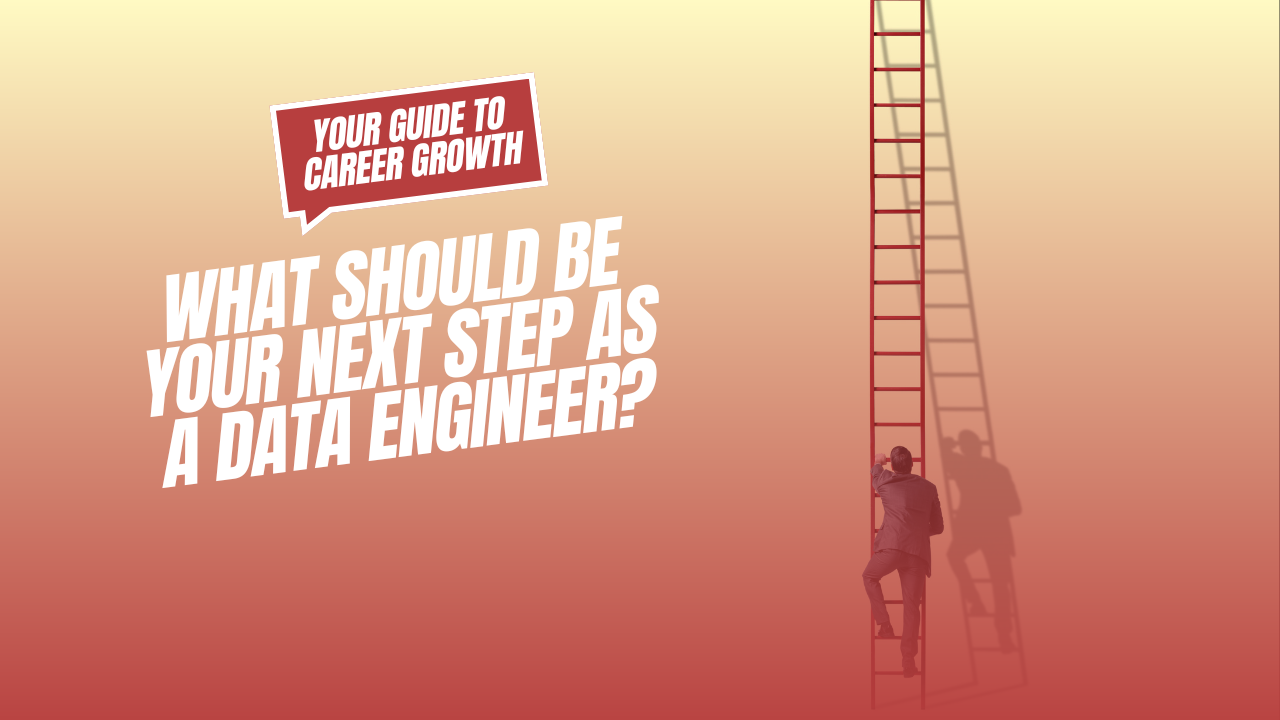
Technical vs management career? One path puts you in control of systems. The other helps you earn influence in the room. Both can make you indispensable, but only if you know yourself and choose deliberately.
In this article, I’ll break down the technical vs management career path. We will explore what each path entails, the differences between them and how you can make the right choice based on your strengths.
The management track
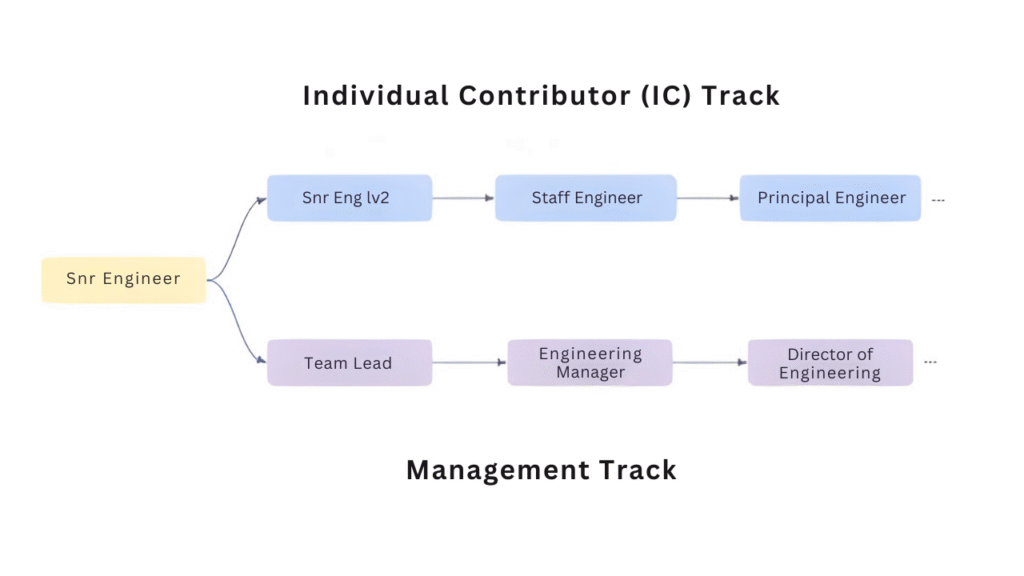
Here’s how the management career path goes in most companies:
- Team lead or project lead
- Manager to middle management roles
- Head of department or leadership positions
- Executive role
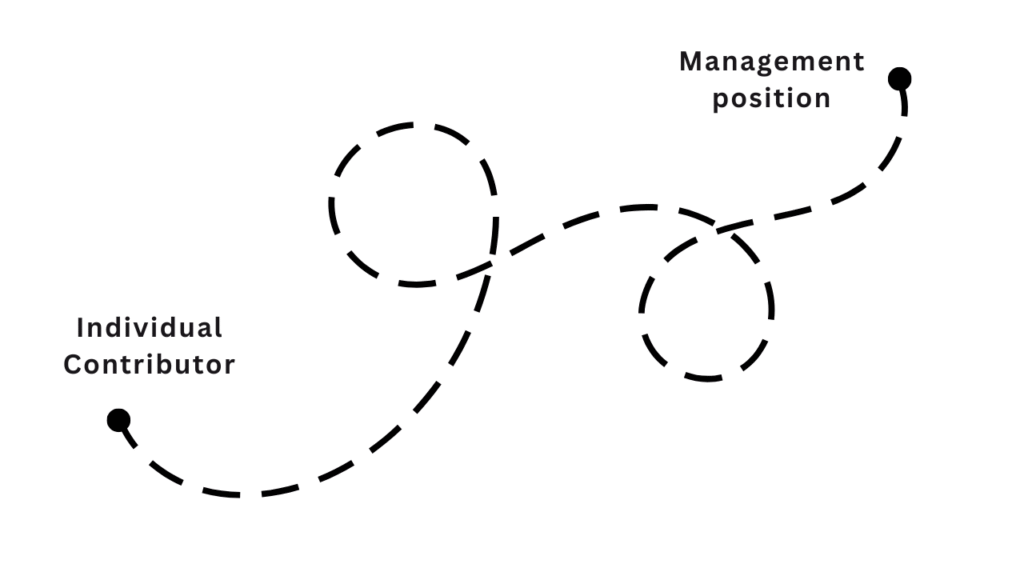
Almost every organisation follows the same pattern with minor alterations. When you step into management, you start with a hybrid of technical and management tasks. As you progress, management and leadership responsibilities grow, and the hands-on technical work shrinks.
A tech lead’s day might start with reviewing code, jump to unblocking a teammate, and end with planning the next sprint. Slightly hands-on, but guiding the team. In contrast, someone in a senior leadership or executive role spends their day in strategy discussions, aligning departments, setting priorities, and making people and business decisions.
So the road to a management career leads you to people skills, with technical knowledge and experience allowing you to bridge the gap between tech and business.
Also read: How to become a tech lead
The technical track
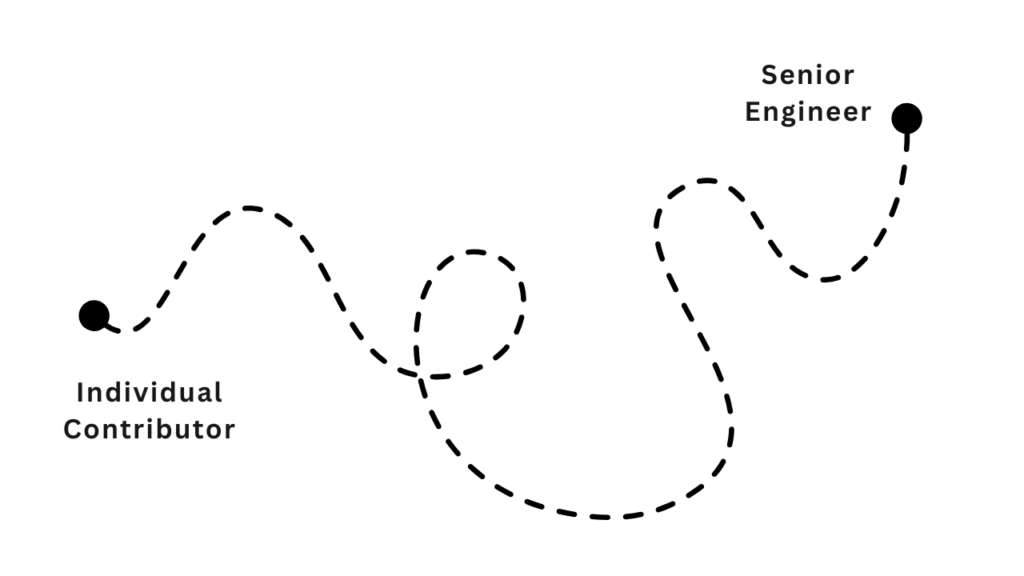
The technical roadmap isn’t simple to generalise. It varies widely across different organisations and industries. You start in an entry-level role and move into senior tech roles, eventually becoming a chief or principal engineer or an equivalent.
The layers between these positions vary from company to company. Some organisations have limited growth in the technical domain, and their engineers hit the ceiling after two to three career steps, while others have clearly defined hierarchies and clear growth potential.
So your organisation and industry matter a lot. If you decide to advance in technical roles, make sure your current company has growth potential. Otherwise, look outside to find a better fit.
The technical career path is straightforward in terms of your day-to-day work. You start by collaborating on projects in specific areas. As you progress, you handle entire projects. Your responsibility and authority increase as you work on complex problems and projects.
Technical vs management career path
We have seen the generalised career progression and day-to-day of both management and technical career paths. Here’s a closer look at how these paths diverge beyond titles and tasks.
Impact
Technical path: You move the company forward by building, solving, designing, and going deep into complex problems. However, since you’re an individual contributor, your influence is limited and less recognised outside your immediate team.
Management path: You move the company forward by guiding the people who do the building, removing blockers, aligning priorities, and shaping team culture. Your impact and influence are broad and visible. And it grows as you move from management to leadership roles.
Also read: How to secure a leadership role without experience
Work-life balance
Technical path: You already know how technical tasks make you feel. The long stretches of quiet, deep focus, problem-solving, and building are mentally heavy but more predictable day-to-day.
However, complex problem-solving and coding can run on autopilot in your mind even after work, soaking up your energy and affecting your personal life.
Management path: Management often feels like juggling conversations, decisions, mentoring, unblocking, and prioritising. It’s less predictable but gives broader influence.
This broad spectrum and managing people can be a headache. Stress is common in managers, and it can also affect your personal life and health.
Promotions
Technical path: Your promotion depends on you. You grow by mastering your craft, solving harder problems, owning complex systems, and making technical decisions that push the product forward.
Management path: promotions depend on the performance of your team. You move up when you can lead larger groups, handle bigger scopes, run multiple teams, and drive business outcomes.
Also read: A realistic 3-step guide to get promoted in the tech and data industry
Salaries
The pay scale and bonuses are higher on the management side. Leaders, heads of departments and executives will be higher in the hierarchy than the senior-most tech position of any company. However, it doesn’t mean the technical path isn’t lucrative.
Some organisations now have very well-defined technical roles that allow their engineers to earn just as well through senior individual contributor roles, without needing a manager title.
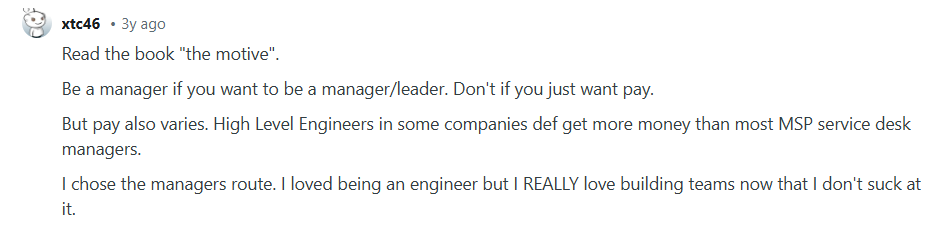
Caption: A screenshot from a Reddit thread.
This is a generalisation. For a clear comparison, I encourage you to look for the numbers based on your location and industry.
Responsibility
Since you’re an individual contributor in technical roles, you’re only responsible for what’s on your plate.
However, in management, you’re responsible for and answerable on behalf of an entire team. When things go wrong, you’re the one expected to step up, take ownership, and drive the solution.
What’s your why? (if you’re inclined towards either of the routes)
Most people don’t really think through this decision. They either go with the flow, seeing their peers and seniors opting for management roles. Being part of the business picture, authority, decision-making, and higher salaries inspire them. Or they think the technical route will hit the ceiling very quickly.
On the other hand, most people who gravitate towards technical roles never explore their soft skills and management potential. They live with their false belief that “it’s not for them”. Or they might fear exploring a new realm while certainty feels safe.
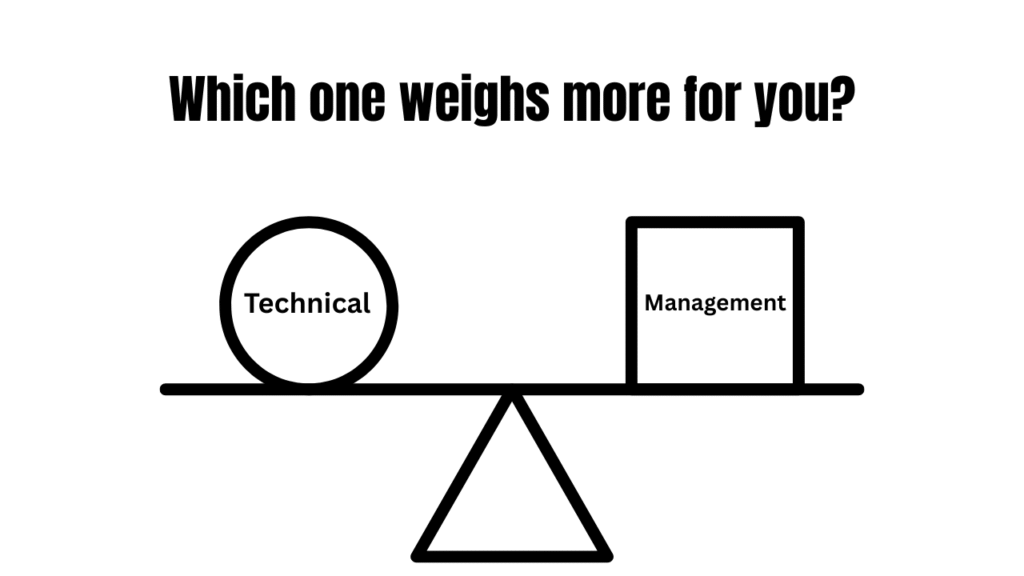
All these feel like strong indicators. However, you’ve only scratched the surface. Digging deep into both roles and your own aspirations for both professional and personal life is extremely important.
So instead of putting a bow on your initial impression, you need to weigh in on every aspect of both roles and should be aware of their pros and cons.
How to find your career path? Management vs technical
What’s your natural tendency?
Explore your why and dig deep into it. Analyse your skills, values and priorities. We have broken down both roles in detail and saw how they differ. See where you lean in those parameters and why. Do you enjoy technical work? Or are you good with people? You don’t have to be a master; the skills can be learned, but do you enjoy leading and managing people?
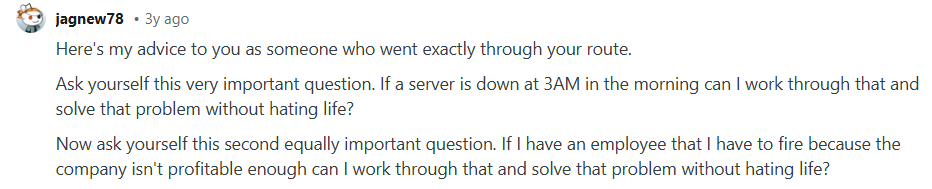
Someone from that same Reddit thread has beautifully summarised it in two questions.
What cons can you handle?
Every role has pros and cons. You have to see what cons you can handle and manage based on your personality and skills. Again, don’t run after perfection. We all learn to handle the downsides, and you can too. But what aligns with your values and is manageable for you will give you a hint where you can learn and grow.
In short, play on your strengths.
Do you resonate with your seniors?
A career advice that works at any stage is to observe people in the roles you’re interested in. Pay attention to their work style, day-to-day work activities, behaviour, impact, workload, and how they balance their personal life. And ask yourself: “Do I see myself in their position?”
If possible, invite them for a coffee chat to discuss the role. Ask questions like:
- What type of people might struggle in this role, and what makes a good fit?
- What does a typical day or week look like for you?
- What part of your role do you enjoy the most?
- What are the biggest challenges you face regularly?
- How does this role impact your work-life balance?
This exercise will give you clarity on both paths and provide a realistic reflection of what each role entails.
Conclusion
Career paths aren’t set in stone. You can pivot. But tech moves fast, and stepping away from hands-on work for even 3 to 4 years makes catching up harder. However, you can move into management at any point in your technical career as long as you have your people skills alive. Because the more technical we get, the more we lose our soft skills.
So yes, it’s not carved in stone, but it’s always better to make the right choice in the first place.

![7 Practical ways to better use AI in CRM [ CTO’s guide]](https://feriotti.com/wp-content/uploads/2026/02/1-3.png)