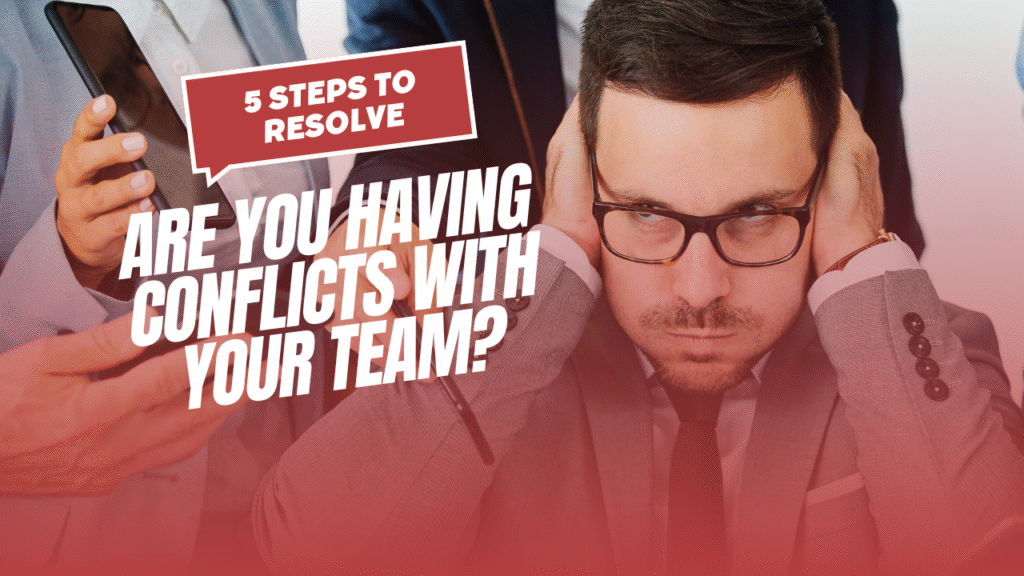
Conflicts are a part of a leader’s routine. You can neither escape them nor avoid them. The only option is to resolve them. And leaders know how to resolve and manage workplace conflicts. They equip themselves with the right conflict management skills and strategies that ensure conflicts don’t derail productivity and relations but instead foster collaboration.
Let’s discuss 5 conflict management skills that are a must-have for every leader and a 5-step process to workplace conflict resolution.
Why conflict management is important and the effect of unresolved conflicts?
Ignored conflicts don’t disappear; they linger. People carry them in the form of frustration or quiet resentment. The team seems to keep moving; however, the friction slows everything down. Progress stalls because the energy is tied up in unspoken tension.
The risk is the grudge, the silence, the unresolved feelings and misunderstandings. It’s the teammate who stops contributing ideas, the analyst who disengages, the group that avoids collaboration altogether.
These small actions seem harmless, but zoom in and you’ll see they are hindering the growth, productivity and progress of the entire team. And if piled up, such conflicts can lead to bigger challenges and disorientation of the team, a nightmare for a leader.
If you handle the conflict well, it has the exact opposite effect. The misunderstandings and harsh feelings get resolved, and the team runs smoothly as before.
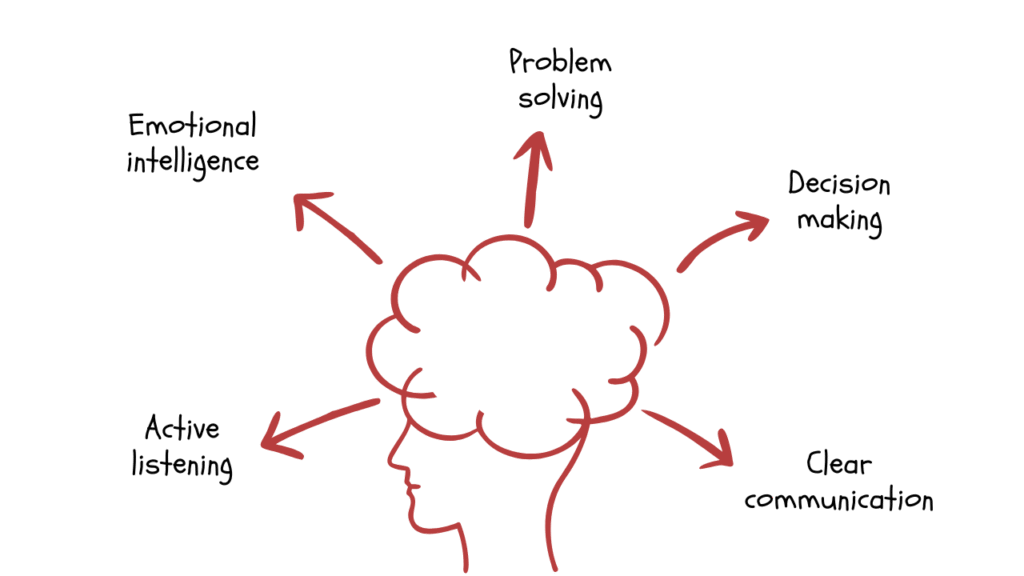
5 Conflict management skills for leaders
Here are five key skills for conflict management in the workplace.
1. Active listening
Most leaders think they’re listening. But in reality, they’re waiting for their turn to speak. They listen to respond and not to understand. Worse, they cut the other person off mid-speaking. Sure, you might have understood their point, but cutting them off makes them feel unheard and unvalued. So the first thing is to let them finish.
Secondly, miscommunication is easy when people are defensive or reactive. As a leader, you need to ensure that you understand the real root cause. Reflect back what you’ve heard. Ask clarifying questions to check if you understood correctly. This small effort reduces tension and often uncovers the real issue hiding behind the surface disagreement.
2. Emotional intelligence
Even the conflicts that are based on logical or technical grounds create emotional strain among the members. As a leader, it’s your duty to read the room while regulating your own response.
Emotional intelligence starts with awareness. Notice when frustration creeps into your voice or when a team member’s body language shifts. A furrowed brow, crossed arms, and silence in a meeting are hints that you should not overlook.
When your team sees you handle conflict calmly instead of being defensive, you set the tone for everyone to feel safe, open, and willing to work through the issue.
3. Problem-solving
Conflict management is problem-solving in disguise, just more complex and layered than debugging a flawed algorithm or reconciling inconsistent datasets.
The goal is simple: sift the focus from personal friction to the shared challenge. Instead of asking “who caused this?”, ask, “what can we do to fix it?”. This one shift changes the conversation from blame to collaboration.
4. Decision-making
Not every conflict can be solved by collaboration. Sometimes, after the discussions, clarifications, and brainstorming, the team still can’t align. That’s when the leader steps in as authority and makes the final call.
Make sure you explain your decision, weighing in all the pros and cons, so everyone can follow along. A few members may not agree, but they’ll respect the clarity and direction.
5. Clear communication
Miscommunication is one of the biggest reasons for conflict in the workplace. A vague message, an assumption, or two people working with different definitions of outcome creates friction that didn’t need to exist.
For tech leaders, clear communication means translating technical details into shared language. Engineers, analysts, and business stakeholders don’t always speak in the same terms. Your role is to bridge that gap so everyone can align on what success looks like.
The conflict management process: A step-by-step framework
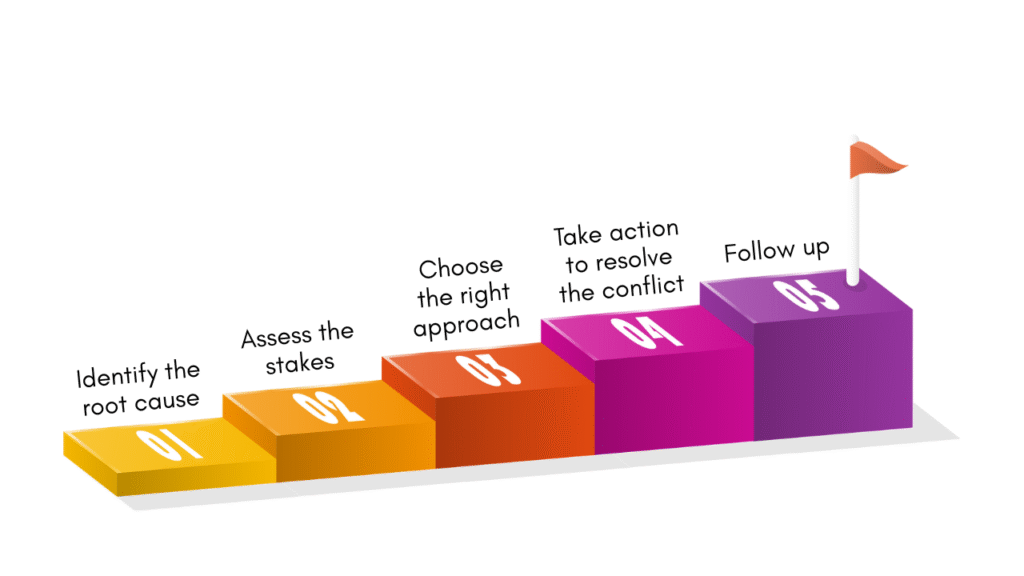
Step 1: Identify the root cause of the conflict
Most conflicts don’t announce themselves clearly, and leaders make their first mistake when they rush to solve what’s visible. Two people debating a deadline, a tense exchange in a meeting, could be a response and not the root cause.
To resolve the real issue, you first need to identify it. And here you’ll use your listening and communication skills. Ask questions and listen for the difference between what’s being said and what’s actually being felt. Sometimes the conflict isn’t about the work at all, but rather about recognition, trust, or ownership.
Step 2: Assess the stakes
There is no universal way of handling a conflict. Some are small disagreements that resolve with a quick check-in, while others put timelines, trust, or team morale at risk.
Before you step in, gauge the impact: How does this affect the project? The people involved? The wider team? Knowing the stakes helps you choose the right conflict management approach.
Step 3: Choose the right approach
Once you know what’s at stake, you can decide on the right conflict management approach. You sure can stick to your conflict management style; however, some situations require a different approach.
Some conflicts call for collaboration and open dialogue. Others need compromise or require you to make a firm decision. Instead of defaulting to one style, match the approach to the situation.
If you don’t know your conflict management style, check out this article on 5 conflict management styles to identify yours.
Step 4: Take action to resolve the conflict
Now it’s the action stage. Based on your conflict resolution approach, bring both parties together and address the issue. Ensure to be calm and empathetic and give everyone a chance to speak. Let it be a constructive session and move towards a solution.
Keep in mind that as a leader, you are not there to pick sides and declare one right and the other wrong. Never let your team members stand against each other. It’s your team vs the problem, and you’re the facilitator.
Step 5: Follow up
Lastly, check in with the people involved after some time has passed. Make sure the agreement is holding, the working relationship is intact, and no new friction has surfaced.
Managing conflict like a leader
Conflicts are natural, but they don’t have to be chaotic. With the right conflict management style, skills and approach, you can resolve conflicts in the best way possible.
And just like any other skill, the more you practice, the better it gets. So don’t be afraid of conflicts, you have all the necessary knowledge and skills to handle them. Put the anxiety aside and let the leader in you take over.

![7 Practical ways to better use AI in CRM [ CTO’s guide]](https://feriotti.com/wp-content/uploads/2026/02/1-3.png)