Debates, arguments and conflicts are natural in a workplace. What matters more is how you resolve the conflict.
As an aspiring leader or manager, you should know the 5 conflict management styles and when to use them to effectively navigate an argument.
5 Conflict management styles
1. Competing style
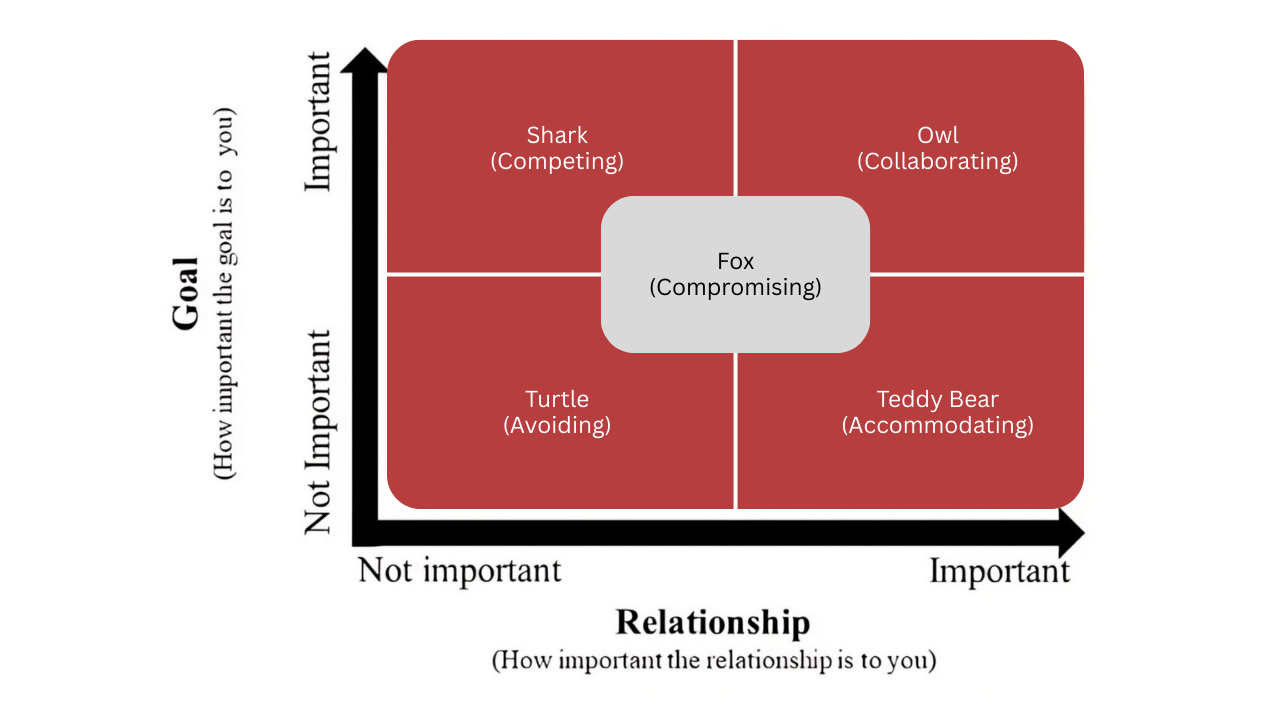
The first conflict management style is competing. This is where you refuse to compromise on your demands with no interest in reaching a middle ground. It is an assertive and dominant style that requires you to stand firm on your ground. Compromise is an unknown word in the dictionary of competing conflict management.
The perk is that you get what you want. The downside, it doesn’t foster relationships. And in some cases, might even dent an existing partnership. For instance, in a negotiation, the other party pushes for shared access to data. Your leader asks to either remove the clause or call the deal off. Similarly, your organisation might refuse to go below the set minimum rate, even if it means losing the client.
You choose the competing style when the outcome is more important than the relationship. As a leader, you should avoid competing when resolving a conflict within your organisation, as it hurts the team.

2. Accommodating style
Accommodating is the exact opposite of competing. You focus on the relationship and let go of the outcome. It means compromising your concerns to settle the argument. Consider accepting the client’s preferred invoicing style even when it is less efficient for your team. You take a bearable disadvantage to preserve the deal.
Though accommodating sounds submissive, it’s a strategic move for conflict resolution. In situations where goodwill and relationship are more important or the issue is minor to you but important for the other person, accommodating is the best move.
A leader should be careful using accommodating style within their team. It is easy to disregard the concerns of the weak party to accommodate the other one. As a leader, it’s your responsibility to maintain the balance and ensure there’s no resentment.

3. Collaborating style
If the relationship and the end goal are both important, you should opt for a collaborative style. This is where you step up as a leader, listen to both parties and find the best possible solution. This approach focuses on fulfilling both parties’ demands and ensuring both are satisfied.
It requires problem-solving and active listening. You need to hear everyone’s perspective and find a solution that satisfies all the concerns. Moreover, everyone should be willing to work together to resolve the issue. If one party turns competitive, collaboration fades unless the leader steps in to resolve it.
For example, IT and design departments argue about a website design. IT advocates for speed, which is stalled by the complex design, while the design team argues about the aesthetic requirements of the brand and the audience. Both parties have strong reasons for their approach. As a tech leader, you’ll guide them to refine the design and optimise the back end to boost speed while staying true to the design philosophy.

4. Compromising style
Compromising is the opposite of collaboration. Here, both parties give up an aspect of their demands to attain a middle ground. In addition to problem-solving, this conflict management style involves empathy and understanding. Both parties must recognise each other’s concerns to reach a mutual ground. In the end, everyone gains some advantage while maintaining their long-term relationship.
Compromising only works when both parties have an interest in settling the matter without denting the long-term relationship. It can break deadlocks and keep momentum going. If either one becomes competitive, the mutual ground cannot be achieved and compromising won’t work.
Note that this style leaves no one fully satisfied; hence, if the compromise becomes too much for one party, it can be a deal-breaker. You use a compromising style when the outcome and relationship are both important. Consider a deal where the client is asking for a hefty discount that you can’t do. You offer a fraction of that discount with an extended free trial of premium features. This maintains the client relationship while both parties sacrifice a little.

5. Avoiding style
You can guess from the name, this style of conflict management means taking a step back. You don’t talk or bring about the argument; rather, you avoid it and let the heat settle on its own. Two teammates clash over project timelines. The team lead pauses the debate and pushes it to the next planning session after everyone has had time to review the data and facts.
Avoiding a conflict doesn’t mean you ignore it. You leave it for the time being, and if it doesn’t resolve on its own, you address it later when the decision-making is important. It’s a useful tactic to be used within a team when egos or emotions are involved and the conflict surrounds a minor aspect of the project that doesn’t impact the big picture.
A leader should know when to put off a conflict and when to address it. Avoidance can lead to unresolved issues, leading to bigger challenges. Knowing when to avoid and when to address is the key when practising the avoiding style of conflict management.

Which conflict management style is the best
So, which should be your signature conflict management style? The answer is none. There is no best conflict management style. Every approach has its pros and cons and fits certain situations the best (which we have discussed).
You should choose a style based on the situational requirements. Leaders may have one dominant conflict-resolving style, but they know when and how to switch up.
However, if we have to rank the best one even in theory, the collaborative approach will get the first place. You should always opt for it whenever you can. It satisfies everyone’s concerns, minimises the argument and maintains goodwill. It makes everyone feel seen and important, putting you, the leader, in a position of trust and influence.
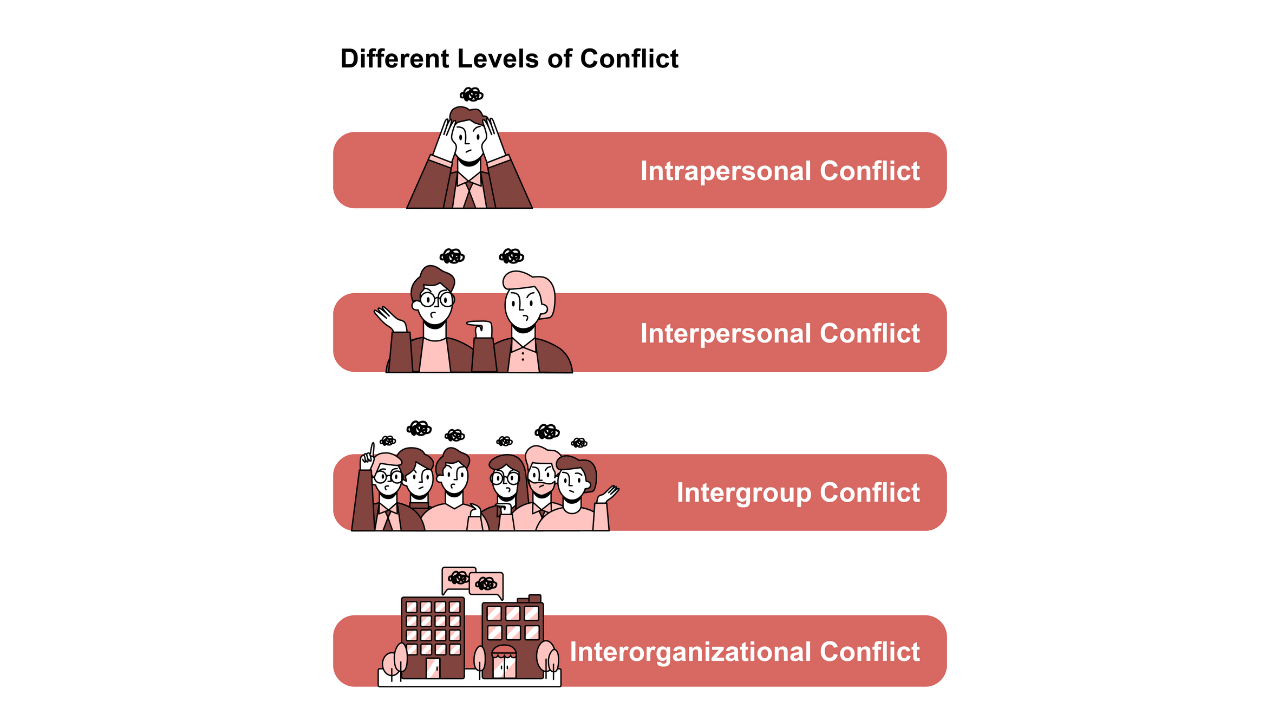
Conflict management style assessment: Find your dominant style
Although all conflict resolving styles are important and suit different situations, we all have one or two dominant styles that we use the most.
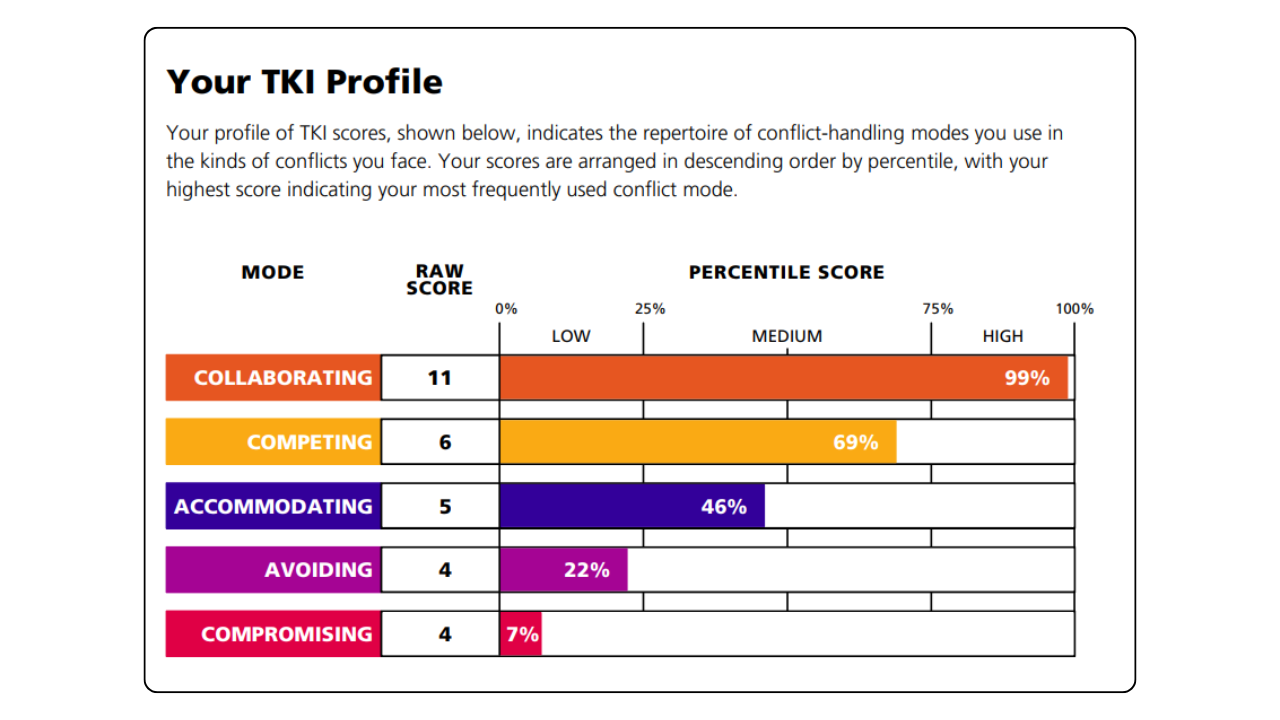
A style assessment helps you understand how you naturally handle conflict. It’s a self-awareness activity that everyone should do to be able to choose the right style at the right time. You learn how your approach might change inside your team vs with clients or partners.
The Thomas–Kilmann Conflict Mode Instrument (TKI) is a well-known conflict management style assessment. It’s a short questionnaire that looks at two things: assertiveness and cooperativeness to tell you which style you lean towards the most.
The final words
Conflict is part of leadership, especially when you’re moving from an individual contributor to a decision-maker. Knowing when to compete, accommodate, collaborate, compromise, or avoid gives you the flexibility to handle any situation effectively.
For data professionals stepping into leadership, mastering conflict management is essential. And there’s a complete module dedicated to this area in my mentorship program. It ensures you can address conflicts in a way that drives progress and strengthens your team.







![How to use AI in spend analytics? [5 use cases]](https://feriotti.com/wp-content/uploads/2026/04/1-3.png)