
Leadership is complicated, not because of the technical failures, bugs in the company code or data gaps that stall the project, demanding immediate action, but because it involves human management.
Humans are complicated, and our interactions are even more complex. Managing people comes with leadership and personal challenges like stress and burnout.
Before you question your interpersonal and people skills, let me tell you that no leader has mastered these skills before becoming a leader. They all started with more or less the same skill sets as yours. The differentiator is their will to learn and improve constantly.
As an aspiring or new leader, take this article as a caveat for what you need to prepare for.
Communication leadership challenges
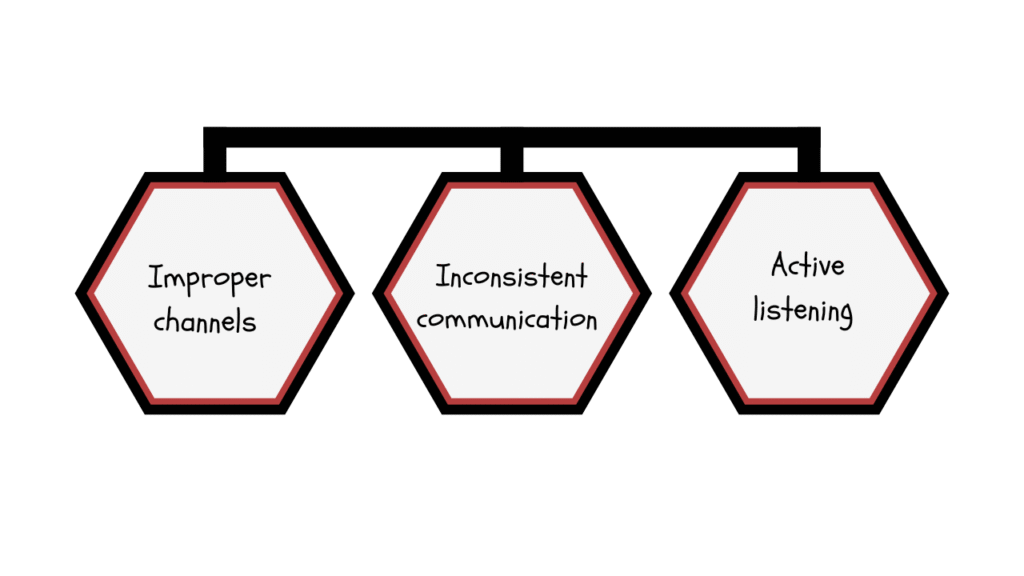
Improper channels
If the communication system among the senior leadership, mid-level leaders, managers and employees is broken, there will be
- Unclear goals and expectations
- Missed deadlines
- Undefined roles
- Unclear mission and priorities
Leading to
- Frustration
- low morale
- constant misunderstandings
Notice how all these issues can be framed as separate challenges, but the root cause is the same.
How to overcome it?
- Arrange weekly or bi-weekly meetings with your subordinates. Discuss the expectations, roles and processes and ensure everyone’s on the same page.
- One-on-one meetings are powerful tools.
Inconsistent communication
Inconsistent communication is one of the biggest challenges for leadership at all stages.
A leader interacts both horizontally and vertically, and each direction of communication requires a different approach. Moreover, they might be leading their former peers or seniors. Team dynamics become complicated, each individual requiring a different form of communication.
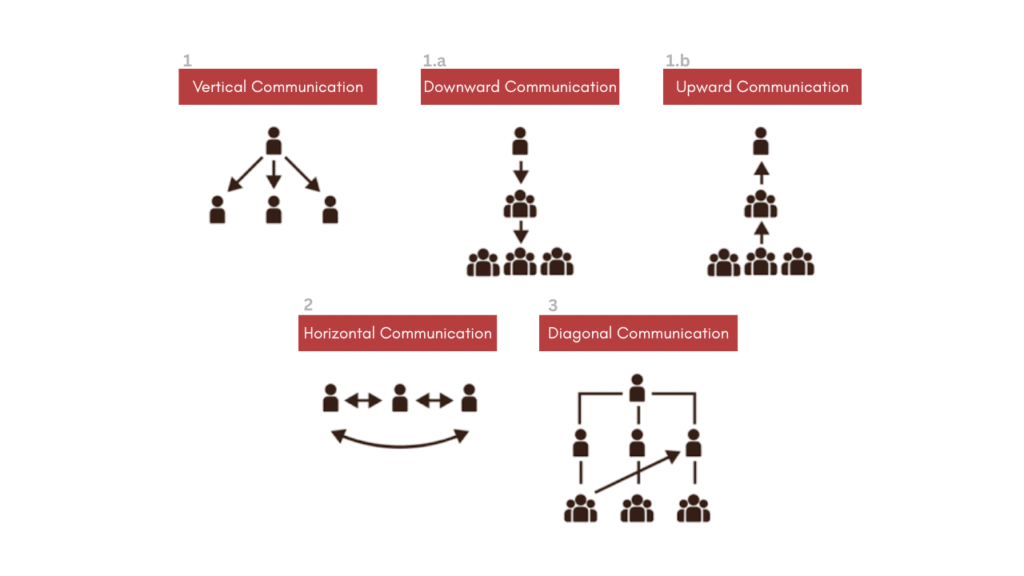
A leader needs to balance between collaboration and assertiveness with their team. On the other hand, they need to be strategic and persuasive when dealing with stakeholders or executives. Even within the team, they might need to adjust their communication and feedback style for individual team members.
How to overcome it?
- Understand your preferred leadership style. It will help you establish a base communication style that you can build upon.
- Put yourself in your audience’s shoes to understand what they want to hear. Your team wants clear communication of goals and responsibilities with a positive and encouraging attitude. On the other hand, a department leader will require you to be strategic, clear and connect your point to the company’s priorities.
Active listening
Balancing collaboration and assertiveness can be a challenge. Letting your team pour in their opinions is one of the easiest ways to keep them engaged. However, if a leader doesn’t consider their team’s perspectives or cuts them off mid-speak, it can be discouraging to the employees, making them feel unheard and overlooked.
How to overcome it?
- Let the other person complete before you speak. (really!)
- Before giving your idea or opinion, let the team members share their ideas to encourage collaboration.
- Appreciate them for their thoughts.
People management leadership challenges
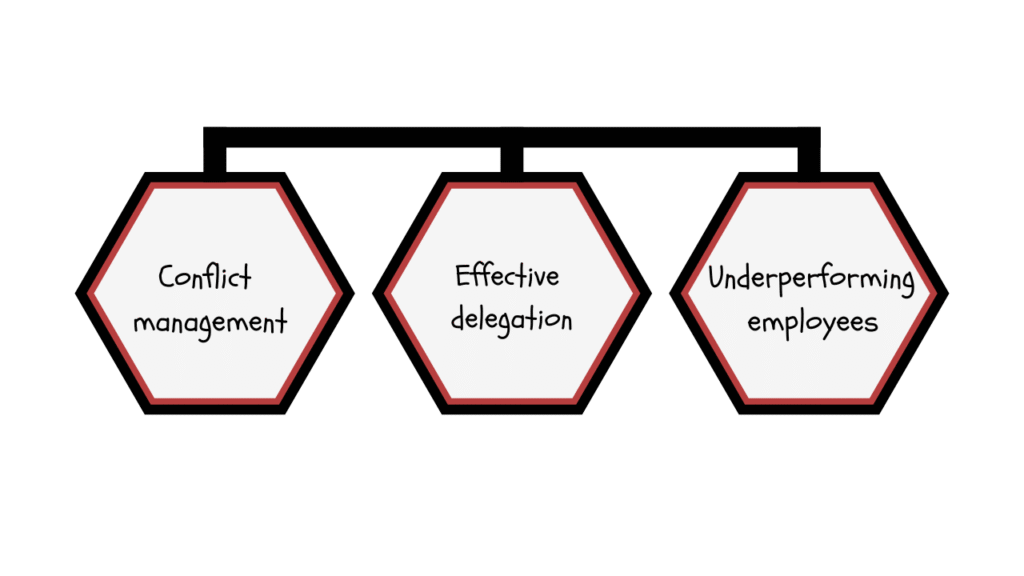
Conflict management
Managing conflicts among team members, stakeholders and departmental leaders is a natural but challenging aspect of leadership. One wrong move can worsen the situation.
How to overcome it?
- Understand different conflict management styles and when to apply them effectively. It will guide your response based on your priorities, helping you avoid missteps.
- Act with maturity, demonstrate emotional intelligence, and respond rather than react.
Effective delegation
New leaders often struggle with delegating tasks and end up having too much on their plates. Prioritising what needs your direct attention and what you should delegate and to whom is a challenge for new leaders, especially if you’re working with a new team.
How to manage?
How to overcome it?
- Clearly define the task, the expected outcome, and the timeline so your team knows exactly what success looks like.
- Hand over responsibilities based on each team member’s skills, experience, and growth potential to build trust and efficiency.
- Trust your team to deliver, but set up regular check-ins to track progress and offer support (if needed).
Managing difficult or underperforming employees
One of the toughest challenges leaders face is handling team members who consistently fall short of expectations or are just difficult to manage. Ignoring only makes the situation worse; rather, take the following steps to guide your team member.
How to overcome it?
- Set clear expectations and measurable goals
- Provide regular, constructive feedback
- Identify root causes: skills, motivation, or personal issues
- Offer support and mentorship
- Hold employees accountable and take action in case of no improvement.
Crisis and change management leadership challenges
The biggest modern-day leadership challenge is change management. With how fast industries are moving, especially tech, change is pretty much the only thing certain.
New strategies, shifting company culture, adopting new technologies, and preparing the team for the shift (who can resist) can become overwhelming.
How to overcome it?
- Explain the “why” behind the change to reduce resistance and build trust.
- Train teams with the skills and mindset to handle uncertainty.
Personal Leadership Challenges
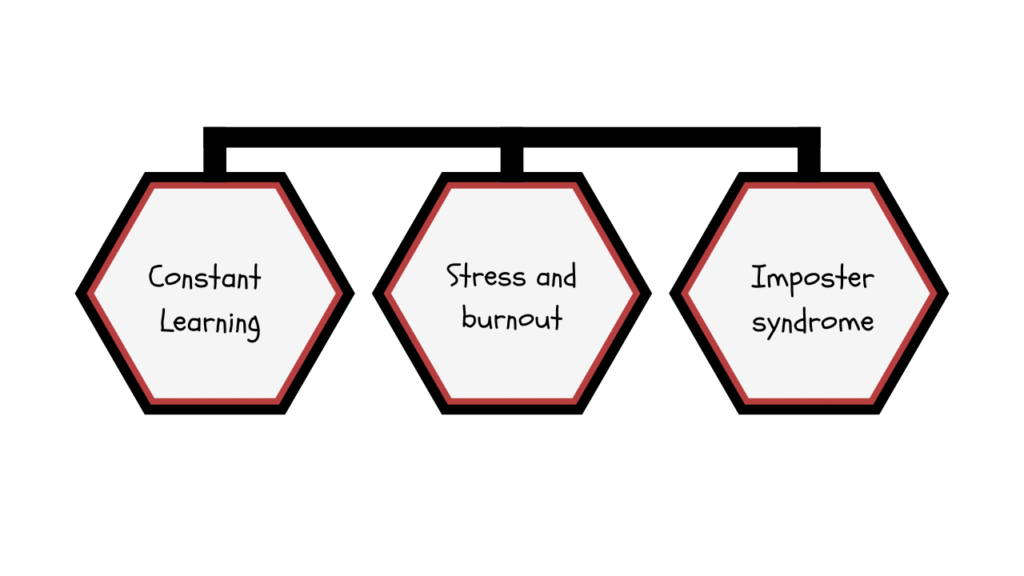
Constant learning and improving
You cannot learn to ride a bike or swim by just theoretically learning about it; leadership is the same. It’s a figure-out-as-you-go process. You cannot master every skill before stepping into your first-ever leadership role. This demands constant learning and improvement.
On top of that, every industry, specifically tech, is evolving so fast that it’s difficult to keep up with the change. New technologies, working methods, operations and processes are a big challenge for the leaders, making them redo their strategies, visions and missions.
How to overcome it?
- Have a growth mindset and treat leadership as an ongoing journey of mistakes and lessons.
- Stay up-to-date on industry trends
- Use the 80/20 rule: Focus on the 20% that drives 80% of the results.
Check out: 10 leadership skills every leader needs and how to develop them
Stress, burnout and imposter syndrome
Keeping up with all the industry trends, self-improvement, people management and overcoming leadership challenges often takes a toll on a leader’s mental health. Stress and burnout are natural in such a fast-paced, dynamic and challenging environment.
For an aspiring or new leader, the leadership challenges and their stress bring another guest, impostor syndrome. Feeling unqualified and unable to take the pressure are the most common and frequent challenges new leaders face.
How to overcome it?
- Focus on facts and data
- Open to learn from other leaders
- Reframe challenges as growth opportunities
Final thoughts
Leadership challenges are inevitable. The difference between incompetent leaders and great leaders is how they adjust their sails to navigate through the storm. Embrace the challenges, learn from them, and take them as a growth opportunity.
Because the toughest moments often hold the lessons that make you unforgettable as a leader.

![7 Practical ways to better use AI in CRM [ CTO’s guide]](https://feriotti.com/wp-content/uploads/2026/02/1-3.png)